


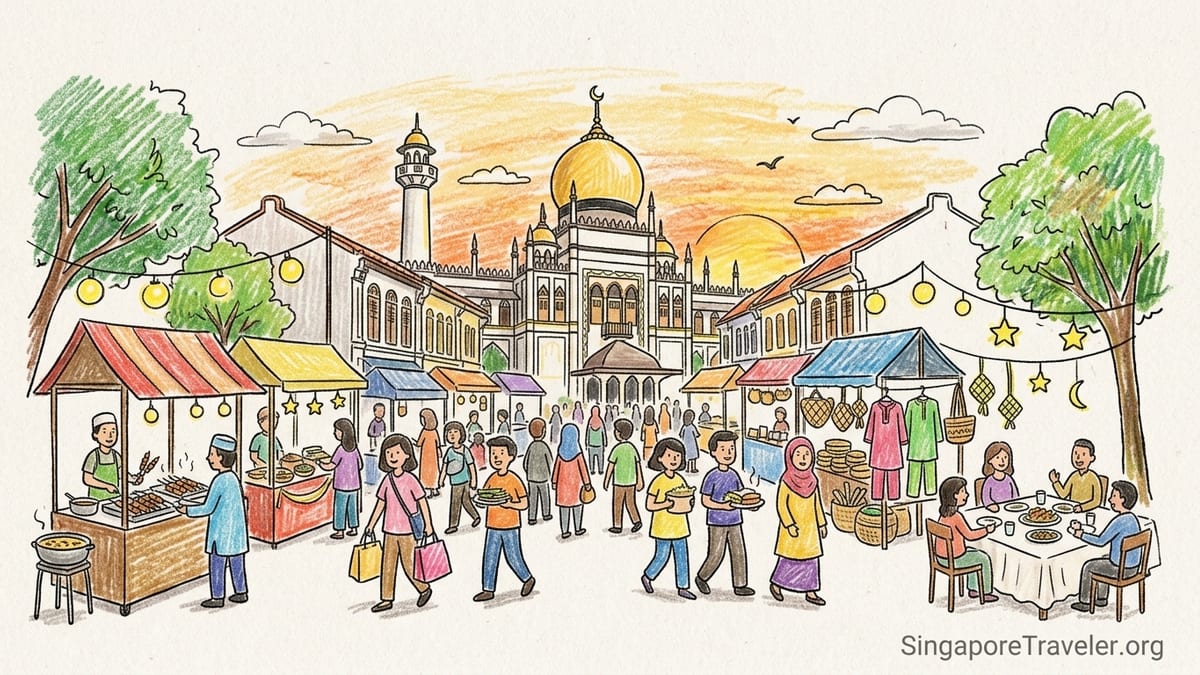
Singapore’s Kampong Gelam Ramadan Bazaar, commonly branded as Gemilang Kampong Gelam, is one of the city’s most atmospheric seasonal street events: a night market wrapped around the golden dome of Sultan Mosque, where modern hawker-style snacking, Raya shopping, and heritage programming share the same few streets. If you remember it only as a place to queue for viral bites, you miss what the organisers are trying to do. The bazaar is designed to sit inside a living Malay-Muslim precinct, with religious programmes, cultural showcases, and communal moments that connect the contemporary night-out to Ramadan traditions.
Dates, footprint, and what “Gemilang Kampong Gelam” actually is
Think of Gemilang Kampong Gelam as a neighbourhood-wide Ramadan season programme, with the bazaar as the most visible piece of it. The event is staged in the Kampong Gelam heritage district, anchored by Sultan Mosque and the surrounding streets where Malay, Arab, and wider Muslim-world influences have shaped the area’s identity for generations. That context matters because it explains why you will see more than just food stalls: you may also encounter talks, workshops, performances, and community iftar initiatives alongside shopping and snacking.
The latest confirmed edition at the time of writing is the 2026 programme. In 2026, Gemilang Kampong Gelam ran until 15 March and spread across Muscat Street, Kandahar Street and Sultan Gate Park. Organisers and media reporting described a total of 103 booths, with more than 90 devoted to food and drink, alongside other activities such as performances, workshops, religious programmes and a mass iftar.
For planning purposes, published listings for 2026 described daily opening hours as 2pm to 11pm. Treat that as the most recently verified schedule, not a permanent rule: each year’s calendar shifts with Ramadan dates and operational decisions. If you are reading this in a future year, use the same framework in this guide, but confirm the new season’s exact dates and hours before you go.
Best time to visit: before iftar versus after iftar
Your experience changes dramatically depending on whether you visit before the fast is broken or after. Before iftar, the bazaar feels more like a neighbourhood stroll: you can actually see stall menus, compare options, and move between Muscat Street and Kandahar Street without constant shoulder-to-shoulder crowding. It is also a practical time to do your “first pass” and decide what you want to eat later, especially if you plan to share several items with friends.
Just before iftar, you will notice a different rhythm. People who are fasting tend to do quick, purposeful purchases to bring home for breaking fast, so some queues can spike even before sunset. If your goal is photography, this is often the moment when the sky is still bright enough to capture the streetscape, but the festive lighting is beginning to read in your shots.
After iftar, the bazaar becomes a true night market: livelier, louder, and usually far busier. This is when social groups arrive to snack, hang out, and take photos near the mosque and the light-up areas. If you want the full buzz, go later, but expect slower walking speeds and longer waits at the most popular food booths.
If you are travelling with kids or older relatives, a smart compromise is an early visit for shopping and light bites, then a second shorter loop later in the evening specifically for the lights and atmosphere. That two-part plan can feel less stressful than one long, peak-hour crawl through the densest crowds.
Food strategy: traditional flavours, viral snacks, and realistic value
Food is the main draw, and in 2026 more than 90 of the 103 booths were devoted to food and drink, so you will not be stuck with only a few choices. The mix tends to span traditional Ramadan and Malay-Muslim favourites alongside “new-school” items built for social media. Practically, that means you might be choosing between a classic snack you grew up with and something engineered to look dramatic on camera.
To keep the experience grounded, plan to try at least one traditional item and one contemporary “trend” item, then decide what you personally think is worth repeating. For travellers, this approach works better than chasing only viral stalls, because it gives you a reference point for flavour, portion size, and value. It also helps you understand what the bazaar is trying to balance: heritage food culture, yes, but also a modern festival economy where novelty sells.
On value, go in with open eyes. 2026 reporting described both traditional foods and social-media-driven items, while some visitors considered prices high. You can make smarter choices by treating the bazaar as a tasting crawl rather than a single massive meal: share dishes, skip the longest lines unless the item is truly special to you, and save one part of your appetite for established eateries in the precinct if you want a more predictable dine-in experience.
One practical tactic is to use the bazaar for portable snacks and desserts, then sit down elsewhere nearby for a more substantial plate if you are hungry. Kampong Gelam has plenty of cafés and restaurants within a few minutes’ walk, and that “split plan” can make the night feel more comfortable, especially during peak post-iftar crowds.
Food versus Raya shopping: how to plan your route
The Kampong Gelam Ramadan Bazaar is often described as a bazaar for food, but for many visitors the Raya shopping element is part of the seasonal ritual. The easiest way to avoid frustration is to decide upfront what you want from the visit: are you here primarily to eat, or are you here to shop for Hari Raya Aidilfitri essentials and gifts? Once you decide, you can time your visit accordingly.
If Raya shopping is your priority, arrive earlier in the day, when it is easier to browse. Shopping takes patience: you need time to compare items, ask questions, and sometimes try things on. Doing that in the densest late-evening crowd can feel more like crowd management than retail therapy.
If food is your priority, aim for a later slot when the atmosphere peaks, but build in extra time for queues. In 2026, the bazaar footprint covered Muscat Street, Kandahar Street and Sultan Gate Park, so you can mentally treat it as three zones. A practical loop is to start at one end, do a quick scan of menus and prices, then commit to your top picks on the second pass rather than impulse-buying at the first tempting stall.
For travellers who want both, separate your goals by time: shop first, eat later. That sequencing mirrors how many locals approach Ramadan bazaars, and it also makes your hands free when you are juggling hot food and drinks at night.
Sultan Mosque surroundings: respectful visiting and the best ambience spots
The Sultan Mosque area is the visual heart of the Kampong Gelam Ramadan season. Even if you do not enter the mosque, you will feel its presence in the way the bazaar flows around it, especially along Muscat Street in front of the mosque and the adjacent pedestrian-friendly streets. This is also where first-time visitors tend to spend the most time taking photos, so expect bottlenecks here during peak hours.
Because this is a functioning place of worship within an active Ramadan programme, it is worth approaching with a bit of cultural awareness. Dress modestly if you plan to enter religious spaces, keep noise levels down right at the mosque’s edges, and be mindful that for some visitors this night out is also a spiritual season. If you want a quieter moment, step a little away from the densest stall clusters and watch the scene from the side streets rather than directly in the main flow.
For ambience, the sweet spot is often the transition zone where you can see the mosque dome in the background while still having room to move. On crowded nights, that might mean positioning yourself near the edges of the bazaar footprint rather than trying to hold your ground right in front of the mosque entrance area. Your photos may actually look better with a slightly angled view that includes shophouses, lighting, and people in motion rather than a tightly packed crowd.
If you are travelling with someone who is sensitive to crowds, plan a simple regroup point that is not in the middle of the flow. A landmark like Sultan Gate Park can be easier to find than “that stall with the long line,” and it reduces stress if your group gets separated.
Light-up evenings, performances, workshops, and why the programming matters
The most memorable nights at Kampong Gelam are not just about what you eat, but what you stumble into: a performance, a workshop, a religious programme, or a communal moment that changes the feel of the evening. That is by design. The event is not meant to read as a standalone food fair that could be dropped anywhere. It is intentionally programmed to connect contemporary bazaar culture to Malay-Muslim traditions in a heritage precinct that still carries deep meaning for the community.
In 2026, published previews and reporting highlighted programming beyond stalls, including performances, workshops, religious programmes and a mass iftar. The mass iftar element is especially important as a signal of intent: it frames the neighbourhood not only as a consumer space, but as a community space where breaking fast together is part of the story.
For travellers, the practical takeaway is to leave room in your schedule for “non-food time.” If you arrive, buy snacks, and leave, you will have the same basic experience you could get at many night markets. If you arrive early enough to catch a cultural showcase, or you linger long enough to feel the shift in mood around iftar, the visit becomes more specific to Ramadan in Kampong Gelam.
Because programming details vary year to year, the best approach is to treat performances and workshops as opportunistic highlights rather than fixed appointments unless you have confirmed the current year’s schedule. If you are building a trip around the bazaar, plan a flexible evening in Kampong Gelam so you can adjust based on what is happening on the ground.
Crowd levels, MRT access, and practical logistics for a smooth visit
Kampong Gelam is one of the easiest heritage districts in Singapore to reach without a car, and that matters during bazaar season when traffic and parking can be frustrating. The most common approach is via Bugis MRT Station, which places you within an easy walk of Sultan Mosque and the main bazaar streets. Nicoll Highway MRT is another workable option, especially if you are approaching from the Beach Road side.
To make your arrival smoother on busy nights, set your expectation that you will likely walk the last stretch. The area is compact and pedestrian-friendly, but it can also bottleneck at the most popular crossings and near the mosque-facing stretches where people stop for photos. Wear comfortable shoes, keep your bag zipped, and decide on a simple meeting point if you are in a group.
Crowd patterns tend to be most intense in the evening after iftar and on weekends, when locals and tourists converge for the lights and night market energy. If you want a calmer experience, consider a weekday visit earlier in the opening window, then return another night if you want the full late-evening atmosphere. In 2026, the published opening hours of 2pm to 11pm gave visitors a wide range to choose from, and the earlier portion of that window can feel dramatically more relaxed.
If you are staying nearby, Kampong Gelam works well as a “walkable night” from the Bugis and Beach Road hotel belt. That also makes it easier to pop in for a short visit rather than committing to a single long session. A shorter, more focused visit can feel more enjoyable than an over-ambitious attempt to try everything in one night.
The Takeaway
Kampong Gelam’s Ramadan bazaar is at its best when you treat it as a seasonal neighbourhood festival, not just a food crawl. Use the streets strategically: browse and shop earlier, come back for the lights and peak energy after iftar, and leave room for cultural programming that ties the event to Malay-Muslim traditions. Expect a mix of traditional flavours and social-media-friendly snacks, and be realistic about value: some visitors do find prices high, so sharing items and pacing your purchases can make the night feel more rewarding. Most of all, anchor your visit around Sultan Mosque and the surrounding streets with respect, patience, and enough time to let the atmosphere unfold.
FAQ
Q1. When is the Kampong Gelam Ramadan Bazaar held each year?
It runs during the Ramadan season, with exact dates changing annually. The latest confirmed edition at the time of writing is 2026, which ran until 15 March 2026.
Q2. What were the confirmed 2026 dates and hours?
For 2026, Gemilang Kampong Gelam ran until 15 March 2026, and published listings described opening hours as 2pm to 11pm daily.
Q3. Where exactly is the bazaar located in Kampong Gelam?
In 2026, the event footprint spanned Muscat Street, Kandahar Street and Sultan Gate Park, around the Sultan Mosque area.
Q4. Is it only a food bazaar?
No. While most booths are food and drink, the programme also includes elements such as performances, workshops, religious programmes and a mass iftar, linking the bazaar to Ramadan traditions.
Q5. What is the best time to visit for fewer crowds?
Go earlier in the day or on a weekday, and consider visiting before iftar for easier browsing and movement.
Q6. What is the best time to visit for atmosphere and lights?
Go in the evening after iftar, when the night market energy is strongest and the light-up ambience is at its most photogenic.
Q7. How many stalls were there in 2026?
2026 reporting described 103 booths in total, with more than 90 devoted to food and drink.
Q8. Are prices considered affordable?
Visitor reactions vary. 2026 reporting noted a mix of traditional foods and social-media-driven items, while some visitors felt prices were high, so it helps to share dishes and choose selectively.
Q9. What is the nearest MRT station?
Bugis MRT Station is commonly used for access to Kampong Gelam and Sultan Mosque, with Nicoll Highway MRT also a practical alternative depending on your approach route.
Q10. Can non-Muslim travellers visit during Ramadan?
Yes. Visitors of all backgrounds typically attend, but it is best to be respectful around Sultan Mosque and mindful that Ramadan is a religious season for many attendees.