


I came to Haji Lane expecting a quick photo stop: two minutes of murals, a few pastel shophouses, and the usual Singapore checklist ticked off before lunch. Instead, walking the entire lane end to end three different times in one day made it obvious why this strip inspires both obsession and eye-rolling. Yes, it is colourful. Yes, it is crowded. But it is also a working little ecosystem of small businesses that swings wildly depending on when you arrive, and it sits on a street with deeper roots than the “Instagram street” label suggests.
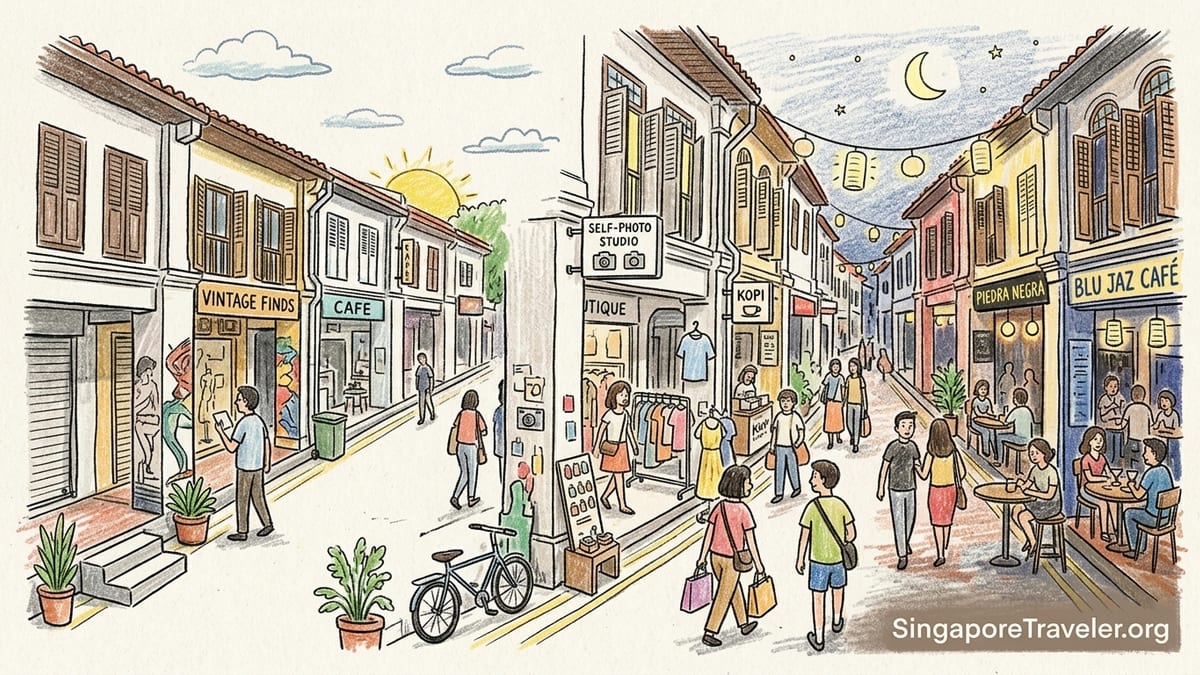
Walking the whole lane, not just the murals
Haji Lane is short enough that people treat it like a backdrop rather than a street. The lane is narrow, built from two-storey conserved shophouses, and it rewards a slow walk more than a fast photo. To do it properly, I started at one end, walked all the way through, turned around, then did it again later once the mood changed. That repeat walk matters because Haji Lane is not one experience. It is three: shutters and silence, then shopping-hour squeeze, then the shift to dinner and drinks.
The first thing you notice when you actually walk it, not just pose on it, is how packed the ground-floor units are with businesses that rely on foot traffic. You pass independent boutiques with clothing racks spilling toward the doorway, small lifestyle stores selling gifts and accessories, and a cluster of self-photo studios and photobooth concepts that have become part of the street’s modern identity. The most photographed walls are real, but the street’s main industry is selling you something, and it is far more interesting to see what.
As I moved down the lane, the “mix” became the story: vintage and thrift-style retail sits beside cafés, small restaurants, and late-opening bars. If you are the kind of traveler who likes browsing for one-off finds, you can easily spend more time stepping in and out of shops than hunting for the perfect angle. If you only come for photos, you will leave thinking Haji Lane is basically one mural after another. Walking it door by door proves it is more layered, and also more commercial, than that.
Morning arrival: shutters, echoes, and a totally different street
I arrived in the morning specifically to see the lane before it “switches on.” That decision changed everything. In the earlier hours, many units are still closed, which means you can hear your footsteps and the hum of the city behind Kampong Gelam more than you hear conversation. The murals look sharper in softer light, and the lane feels wider than it actually is because you are not constantly sidestepping other people.
The tradeoff is obvious: you do not get the full experience of the businesses. In the morning, the street can feel like a set waiting for actors. It is great for anyone who wants to photograph the architecture and street art without crowds, but it is not ideal if your goal is shopping. A few places open earlier, especially photo studios that run on all-day demand, and some cafés, but many boutiques still treat late morning as their true start.
What surprised me was how much the morning highlighted the conserved shophouse bones underneath the paint. With less visual noise from people, you notice how compact the facades are and how tightly everything fits. It also made it easier to appreciate that this is a heritage conservation area where some of the earliest shophouses in Kampong Gelam survive on Haji Lane, a fact noted by the Urban Redevelopment Authority. The street’s current fame is new, but the built form is not.
Afternoon reality: the lane turns into a squeeze and a sales pitch
By afternoon, Haji Lane becomes what most people recognize from social media: packed, noisy, and kinetic. The lane’s narrowness stops being charming and starts becoming the main logistical issue. You get a constant weave of photo-taking groups, shoppers carrying bags, couples trying to pass in both directions, and the occasional delivery moving slowly through. It is not dangerous, but it can be tiring if you expected a relaxed browse.
This is also when the street feels most tourist-oriented, not because the businesses are fake, but because the flow of people changes how businesses behave. Staff are busier. The shopping experience becomes more transactional. You see more customers walking in, checking a rack quickly, and walking out. If you want a slower conversation with a shop owner about sizing, fabric, or where an item came from, you are more likely to get it earlier in the day or on a quieter weekday.
The afternoon crowd is also when you feel the branded interest around the lane. Haji Lane is not a mall street, but it is a street that sells a lifestyle, and it knows it. The lane’s “brand” is indie-cool: street art, curated racks, cafés with photogenic drinks, and the self-photo studio boom that has turned parts of the street into a memory-making machine. One clear example is Solace Studios, which operates self-photo concepts on Haji Lane with posted hours of 10am to 10pm. When those studios are busy, you see people streaming out with prints in hand, then immediately stepping onto the lane for a second set of outdoor photos.
What felt genuinely independent, and what felt built for the camera
After walking the whole stretch and watching who goes where, a pattern emerges. The genuinely independent feeling places are the ones where you can tell the stock changes, the staff actually know the product, and shoppers are making considered purchases rather than only looking for a backdrop. These tend to be smaller fashion and lifestyle boutiques and vintage-leaning shops where browsing takes time and the point is the hunt.
Then there is the camera-first layer: businesses that exist because the lane is famous for being photographed. Self-photo studios and photobooths fall into this category, and they are not inherently bad. They are simply honest about what people are doing here. Some travelers will roll their eyes at the photobooth density, but watching groups come out laughing, taping prints into their phone cases, and then heading to dinner nearby makes it clear why the concept fits Haji Lane’s vibe. It is social, quick, and designed for sharing.
On this trip, I popped into a couple of photobooth concepts rather than pretending they are not part of the street now. PickyPic Photobooth, for instance, is listed as a Haji Lane photobooth studio and was updated in 2026 on a venue listing site, reinforcing how current and competitive this niche is. The lane’s “indie” identity now includes this highly modern kind of business, even if it clashes with the heritage mood some visitors want.
What felt most tourist-oriented were the spots where the “Haji Lane aesthetic” seemed to be the main product, not an accidental side effect. The line between indie and touristy is blurry, though. A boutique can be independent and still cater heavily to visitors. The difference, to me, was whether locals looked like they were shopping there too, and whether the store felt like it had a point of view beyond “cute wall, cute stuff.”
What I bought, what it cost, and the prices that define the lane
I made myself buy something on Haji Lane, because it is too easy to treat the street like a free photo studio and contribute nothing to the businesses that keep it alive. I ended up buying a small gift item from a lifestyle shop rather than clothing, partly because sizes can be hit-or-miss when you are browsing quickly, and partly because I wanted something easy to carry for the rest of the day. The purchase was not cheap in a bargain-hunt sense, but it felt fair for a curated, small-batch retail environment.
For coffee prices, the lane sits in that modern Singapore café bracket where a basic espresso drink often lands in the mid-single digits and specialty drinks go higher. A nearby Kampong Gelam café menu example I verified in the same district shows prices like Espresso at about S$5 and a white coffee at about S$6.50, with matcha around S$6.50, which lines up with the general feel of the area. If you are used to hawker-centre pricing, Haji Lane café culture will feel expensive. If you are coming from a major U.S. city, it will feel familiar.
For a concrete restaurant anchor, Piedra Negra is one of the names that comes up repeatedly around Haji Lane, and its published online delivery menu shows dish prices that quickly push a meal into the teens or low twenties in Singapore dollars. Items like guacamole around S$16 and burritos around the high teens to low twenties are typical of the area’s sit-down casual dining. You can eat more cheaply elsewhere in Singapore, but Haji Lane is not trying to be cheap. It is trying to be a vibe.
By evening, the spending shifts from shopping and coffee to drinks. A published Blu Jaz Cafe beverage menu shows typical bar pricing for spirits and bottle service style listings, and the venue also posts event-style nights with entry fees and promotions. You do not need to party here to enjoy the lane, but if you stay late enough, you see how the street makes money: daytime retail, then a nighttime handoff to restaurants and bars nearby.
The history behind the hype: pilgrims, shophouses, and why the name matters
The most useful thing I did before visiting was remind myself that Haji Lane is not just a marketing concept. The Urban Redevelopment Authority notes that some of Kampong Gelam’s earliest shophouses can be found on Haji Lane, and that these buildings historically housed accommodation for Muslim pilgrims transiting through Singapore, tied to the Hajj pilgrimage. That detail changes how you see the street. It adds weight to a place that is easy to dismiss as a selfie corridor.
You can feel the tension between the lane’s origin story and its current reality. On one hand, the street’s name itself points to a religious journey and a regional network of travel and services that once ran through Kampong Gelam. On the other hand, today’s lane is a tight lineup of boutiques, cafés, and nightlife-adjacent businesses that serve a totally different kind of traveler. Both things can be true at once. Heritage areas in modern cities rarely stay pure. They adapt, or they hollow out.
Walking Haji Lane with that history in mind made me look up more often. I started noticing the proportions of the buildings, the compact upper floors, and how little space there is behind each storefront. Even with a mural on the facade, the shophouse shape is still legible. In the quiet morning, especially, you get a better sense of how the lane may once have functioned as practical lodging rather than a curated retail strip.
The Takeaway
Haji Lane deserves more time than a photo stop, but less time than a full-day mission unless you are committed to shopping and lingering. For most travelers, the sweet spot is about 60 to 90 minutes to walk end to end slowly, pop into several boutiques, do one café stop, and absorb the atmosphere. If you want to add a sit-down lunch or dinner and a bar, you can easily stretch it to two to three hours without forcing it.
Arrival time is the real hack. In the morning, you get breathing room, cleaner photos, and a calmer sense of the conserved shophouse street. In the afternoon, you get the full retail energy, plus crowding that can make the lane feel more touristy than it actually is. Later, the lane’s orbit shifts toward restaurants, bars, and music venues in the surrounding Kampong Gelam streets, and you understand why people treat this neighborhood as an evening plan as much as a daytime shopping stop.
If you want the “behind the Instagram” version, do what I did: walk it once early, then come back later for the human reality. Buy something small even if you are not a big shopper. And hold the two versions of Haji Lane in your head at once: a street with real heritage bones, and a street that has successfully turned itself into a modern brand.
FAQ
Q1. Is Haji Lane worth visiting if I do not care about Instagram photos?
Yes, if you like small boutiques, café culture, and compact neighborhood streets. If you dislike crowds and shopping, go early or skip peak afternoon hours.
Q2. What time should I arrive for the quietest experience?
Morning is noticeably quieter, with many shutters still down and far fewer people in the lane.
Q3. What time is best if I actually want to shop?
Late morning into afternoon is best because more boutiques and cafés are operating at full pace, but expect heavier crowding.
Q4. How long does it take to walk the full length of Haji Lane?
The walk itself is quick, but with browsing and one café stop, most travelers should plan roughly 60 to 90 minutes.
Q5. Is Haji Lane mostly independent businesses or chains?
It leans strongly toward small businesses and boutique-style retail, though some concepts are clearly designed around high visitor traffic.
Q6. What kind of shopping is Haji Lane best for?
Think boutique fashion, accessories, lifestyle gifts, and vintage or thrift-leaning racks rather than big-brand shopping.
Q7. How expensive are cafés around Haji Lane?
Expect modern Singapore café pricing, with coffee often in the mid-single digits in Singapore dollars and specialty drinks higher.
Q8. What is the historical meaning behind the name “Haji Lane”?
URA notes the street’s connection to the Hajj pilgrimage and that shophouses here historically housed pilgrims transiting through Singapore.
Q9. Are the photobooth and self-photo studios actually part of the Haji Lane experience now?
Yes. They are a major current trend on and around the lane, and they shape the crowd patterns and what people do beyond shopping.
Q10. When does the area feel more like a nightlife spot?
In the evening, nearby restaurants and bars become the focus, and the neighborhood shifts from shopping energy to dinner-and-drinks activity.