


Few parts of Singapore capture the city’s past and present as vividly as Chinatown. Around Keong Saik, Duxton, Ann Siang, Pagoda Street and Telok Ayer, rows of conserved shophouses now hide some of the city’s most characterful boutique hotels. These properties trade glass facades and oversized lobbies for five‑foot ways, timber shutters and compact rooms with serious style. This guide focuses on the best of them, and on the practical questions that matter when you are choosing where to stay: how small are the rooms really, how noisy are the streets at night, will you get a lift or need to climb stairs, and does the heritage charm truly compensate for less space.
Why Chinatown’s Shophouse Hotels Are A Category Of Their Own
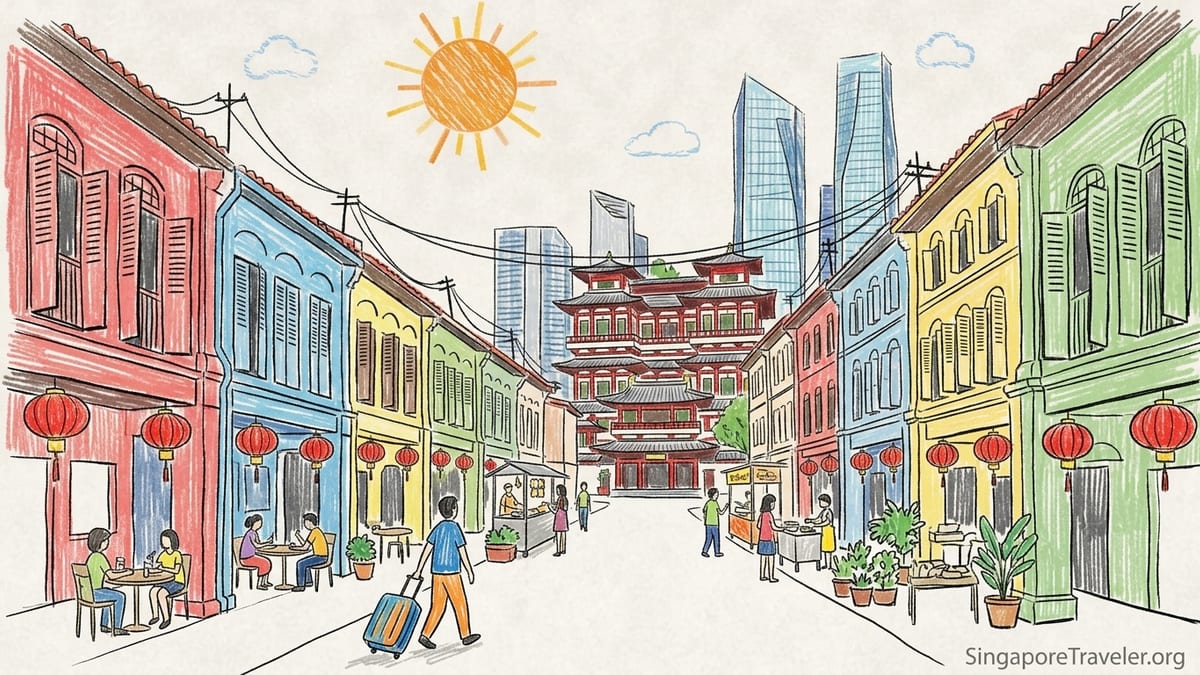
Chinatown’s boutique hotels cluster along Keong Saik Road, Duxton Hill, Ann Siang Hill and Telok Ayer, all officially conserved districts where many buildings date from the late 19th and early 20th centuries. Instead of towers, you get long terraces of two to four storey shophouses, originally built with shops at street level and family quarters above. Urban redevelopment rules limit what owners can change, so most conversions keep original facades, five‑foot way arcades and internal timber staircases. Inside, however, many have been reworked into stylish small hotels aimed at travellers who prefer atmosphere to square footage.
The result is a niche that feels very different from larger Chinatown options like mid‑range tower hotels near Upper Cross Street. Properties such as KēSa House on Keong Saik, Duxton Reserve on Duxton Road and Ann Siang House in Telok Ayer fill entire rows of shophouses or heritage blocks, each room carved out of existing floor plates. That leads to quirky layouts and a wide variety of room sizes even within a single category. It also produces the streetscape that many visitors now seek out: pastel plasterwork, wooden shutters, hanging lanterns and a dense grid of cafes, cocktail bars and hawker stalls just outside your door.
At the same time, this building stock imposes real trade‑offs. Many rooms are smaller than in modern hotels at similar price points, some properties do not have pools or full‑scale gyms, and lifts can be tight or absent depending on the depth of the conversion. Noise from nearby bars is also a genuine factor on streets like Keong Saik and Ann Siang, which have evolved into nightlife hotspots. Understanding these compromises is essential to deciding whether a Chinatown shophouse stay is right for you.
Keong Saik & Duxton: Design Hotels In Former Red‑Light Streets
Keong Saik Road and the lanes feeding into Duxton Hill have transformed from rough‑edged red‑light streets into some of Singapore’s most fashionable heritage blocks. Today the same pre‑war shophouses contain specialty coffee bars, natural wine spots and design‑forward hotels. KēSa House sits on a long run of conserved shophouses on Keong Saik Road and positions itself as a four‑star boutique property with a strong communal feel. Rooms often start small by international standards, with compact “cozy” categories aimed at solo travellers, and larger studio‑type spaces at the top end. Many guests spend as much time in shared lounges and the outdoor terrace as in their rooms, which suits those who treat the hotel mostly as a sleep and shower base.
A short walk away on Duxton Road, Duxton Reserve Singapore, part of the Autograph Collection, occupies a row of 19th‑century shophouses with a more opulent design language. Its interiors combine dark lacquer, gold detailing and dramatic screens, a world away from the minimalist lines of newer lifestyle brands. By shophouse standards, room sizes are relatively generous, though still smaller than big‑box hotels in Marina Bay. Noise can be a consideration, since Duxton Hill and its surroundings are packed with restaurants and bars that stay lively into the late evening. In return you are a comfortable stroll from the hawker stalls at Maxwell Food Centre and the main Chinatown heritage streets.
For travellers who want a contemporary tower experience while still basking in shophouse views, Mondrian Singapore Duxton rises just behind the heritage rows. While not a pure shophouse conversion, its “Shophouse” category rooms face the conserved streets, pairing floor‑to‑ceiling windows with the tiled roofs and colourful facades below. This hybrid option gives you full lifts, a rooftop pool and more conventional room sizes, without sacrificing the visual connection to Chinatown’s historic fabric.
Ann Siang & Telok Ayer: Heritage Blocks Near The CBD
On the other side of Chinatown, the Ann Siang and Telok Ayer area blends clan associations, temples and merchant houses with the glass towers of the central business district. Ann Siang House is a standout here, an all‑suite boutique property set in a restored heritage building on Ann Siang Road. Suites are notably larger than the typical shophouse hotel room, often closer to compact city apartments with sitting areas and kitchenettes. That extra space makes Ann Siang House popular with longer‑stay leisure travellers and business guests who want a heritage feel but need somewhere they can comfortably work and relax.
Just down the slope in Telok Ayer, Amoy Hotel offers a different kind of heritage immersion. Housed in a restored shophouse complex connected to an historic Chinese temple courtyard, it weaves local history into the guest experience, from traditional design cues to nods to the merchant community that once dominated the area. Rooms at Amoy skew compact, reflecting the footprint of the original buildings, but the sense of place is hard to beat. Step outside and you are minutes from the Telok Ayer and Chinatown MRT stations, rows of conserved shophouses that now house Korean barbecue spots and bars, and the broader financial district.
One of the key advantages of staying around Ann Siang and Telok Ayer is connectivity. You are within easy walking distance of multiple MRT lines, including the Downtown, North East and East West lines via nearby stations. At the same time, the immediate streets retain a quiet charm during the day, with heritage trails leading you past clan houses, the Buddha Tooth Relic Temple and converted godowns. Evenings bring a buzzy restaurant scene, especially on Club Street, but the topography of the hill and the way hotels are set back can soften noise compared with ground‑floor rooms along Keong Saik.
Room Size, Layout And The Reality Of Compact Heritage Stays
Space is the single biggest adjustment for many guests coming from resort destinations or newer Asian city hotels. In shophouse properties across Chinatown, entry‑level rooms often start around the size of a generous walk‑in wardrobe and can feel tight for couples with large suitcases. KēSa House, Amoy and several micro‑hotel style properties around Chinatown illustrate this trend: think clever storage under beds, wall‑mounted desks and sliding doors rather than separate changing areas. Beds frequently run wall to wall, which maximises sleep space but limits circulation on both sides.
At the same time, the best of these hotels turn constraints into character. Higher category rooms sometimes span the width of two former shophouse bays, creating long, narrow layouts with separate sitting zones, or add mezzanine sleeping platforms under exposed timber beams. Hotels like Ann Siang House and certain categories at Duxton Reserve offer suites or studio‑style rooms that feel closer to a compact city apartment than a traditional hotel room. These are the options to prioritise if you value space, are staying more than two or three nights, or are travelling with significant luggage.
Families and groups should pay close attention to maximum occupancy rules. Fire regulations and floor plate limitations mean many shophouse boutique hotels are designed primarily for one or two guests per room. Interconnecting rooms or sofa beds are less common than in larger chain properties. If you are travelling with children or in a multi‑generational group, looking for suite‑type layouts in Ann Siang or considering a boutique hotel that blends heritage with a more conventional floor plan, such as Mondrian Duxton, will make day‑to‑day living more comfortable.
Street Noise, Lifts, Pools And Other Practicalities
Noise is an unavoidable topic in Chinatown’s boutique scene. Streets like Keong Saik Road and Ann Siang Hill are now established nightlife destinations, with outdoor seating and music that can carry well after midnight, especially on weekends. Rooms facing these streets may pick up bar chatter and traffic even with modern glazing. If you are sensitive to noise, request a rear‑facing room or higher floor where possible, or focus on slightly quieter side streets around Duxton Hill and Telok Ayer, where the residential mix tempers the late‑night buzz.
Lifts are another point to verify in heritage conversions. Some long shophouse blocks have been retrofitted with small elevators that stop on split levels, while others rely more heavily on staircases due to structural limits. This can matter if you have mobility concerns, heavy luggage or small children. A modern tower hotel on the edge of the district will almost always offer larger elevators and step‑free access, but will not deliver quite the same immersive shophouse feel. Reading recent guest comments and checking room descriptions can help you avoid surprises on arrival.
Few pure shophouse boutiques in Chinatown have full‑sized pools, simply because the plots are shallow and rooftops are often reserved for bars or small terraces. Rooftop plunge pools or hot tubs occasionally appear, more as scenic perks than serious lap facilities. If swimming and sunbathing play a big role in your stay, consider pairing a Keong Saik or Ann Siang hotel with day access to a larger pool elsewhere in the city, or opt for hybrid properties like Mondrian Duxton that combine heritage views with modern leisure amenities. Most boutique hotels in this district do, however, provide efficient air conditioning, solid Wi‑Fi and thoughtful in‑room amenities, reflecting the expectations of an urban, design‑conscious clientele.
MRT Access And How Central Chinatown Really Is
One of the reasons Chinatown’s boutique hotels have become so popular is simple geography. The area sits at the junction of several MRT lines, with Chinatown station connecting the Downtown and North East lines, Outram Park serving the East West and Thomson–East Coast lines, and Telok Ayer providing further Downtown line access. From most shophouse hotels around Keong Saik, Duxton and Ann Siang, you are usually a five to ten minute walk from at least one of these stations, putting Marina Bay, Orchard Road and the airport within a straightforward train ride.
For many visitors, this means you can base yourself in a highly atmospheric neighbourhood without sacrificing convenience. In practice, travelling to the Gardens by the Bay, National Gallery, Little India or Kampong Glam often takes 15 to 25 minutes by MRT, which is competitive with more sterile business districts. Taxis and ride‑hailing services are abundant, and journeys to the airport commonly take around 20 to 30 minutes outside of peak traffic. The compact size of central Singapore means that as long as you are close to an MRT station, you rarely feel far from the main sights.
When weighing up room size versus location, it often makes sense to accept a smaller heritage room in Chinatown if you plan to lean into the neighbourhood. Being able to step outside for late‑night congee on Keong Saik, morning coffee on Duxton Hill or an evening walk through the temples and markets around Pagoda Street can be worth more than a few extra square metres of carpet. For travellers who prioritise quiet above all else, however, staying in a slightly less dense area and visiting Chinatown on day trips may provide a better balance.
Does Heritage Atmosphere Compensate For Smaller Rooms
Whether the heritage setting of Chinatown’s boutique hotels outweighs their compromises is ultimately a personal calculation. If you are the sort of traveller who spends most of the day exploring, values local colour and is comfortable in compact spaces, the answer is often yes. The ability to sleep in a 19th‑century shophouse, walk under shaded arcades past incense‑filled temples and people‑watch over kopi at a corner coffeeshop creates a sense of place that standard business hotels cannot replicate. Properties like Duxton Reserve, KēSa House, Ann Siang House and Amoy deliberately lean into this, layering design details, local art and curated neighbourhood guides onto the original architecture.
On the other hand, if you are planning a longer stay with plenty of in‑room downtime, or if you are travelling with young children who need space to play, the trade‑offs become more acute. Smaller bathrooms, limited storage and a lack of balconies or outdoor space can feel restrictive over time. In those cases, either booking higher‑category rooms or combining a few nights in Chinatown with time in a more spacious resort or business hotel elsewhere in Singapore can work well. You enjoy the historic immersion without committing your entire trip to a footprint designed for a very different era.
Price plays a role too. Chinatown’s boutique inventory spans everything from reasonably priced micro‑rooms to luxury design hotels that charge a premium for scarce heritage stock. At similar nightly rates, a branded high‑rise in another district may offer more space, a large pool and extensive facilities, but at the cost of a more anonymous setting. For many repeat visitors, paying slightly more for a well‑run heritage property in Chinatown feels justified because it anchors the trip in a specific, memorable neighbourhood rather than a generic urban backdrop.
The Takeaway
Chinatown’s boutique and heritage hotel scene has matured into a distinct category within Singapore’s wider accommodation landscape. From the shophouse terraces of Keong Saik and Duxton to the heritage blocks of Ann Siang and Telok Ayer, travellers can now choose from a range of design‑led properties that make the most of conserved architecture. The common thread is character: timber shutters, tiled corridors, intimate lobbies and streets that still echo with the stories of clan houses, merchants and migrant communities.
That character, however, comes wrapped in practical realities. Rooms are often compact, noise from surrounding nightlife is a factor, lifts and pools are not guaranteed, and families may find occupancy rules less flexible than in larger hotels. Excellent MRT access and short travel times to most major sights soften these issues, but do not eliminate them. Before booking, it is worth being honest about how much time you will spend in the room, how sensitive you are to sound, and whether climbing stairs or sacrificing a bathtub will bother you.
If you value sense of place over square footage, are comfortable living small and want to experience a slice of old Singapore adapted for modern travel, then a boutique shophouse stay in Chinatown can be one of the most rewarding ways to sleep in the city. Choose your street with care, pay attention to room categories rather than just hotel names, and you will likely come away with memories of creaking floorboards, glowing lanterns and morning walks through narrow lanes that feel far richer than any extra few metres of carpet.
FAQ
Q1. Are boutique shophouse hotels in Chinatown suitable for first‑time visitors to Singapore
Yes, they suit many first‑time visitors because the area is central, walkable and well connected by multiple MRT lines, and you can experience local food, temples and markets just outside your door. The main adjustment is accepting smaller rooms and potentially more street noise than in business districts.
Q2. How noisy are Keong Saik and Duxton at night
Keong Saik Road, Duxton Hill and surrounding streets are busy dining and bar areas, especially on Thursday to Saturday nights. Front‑facing rooms may pick up chatter and traffic until late evening. Travellers who are light sleepers should request a rear‑facing or higher‑floor room where possible, or choose slightly quieter streets around Telok Ayer.
Q3. Do most Chinatown boutique hotels have lifts
Many heritage conversions have small lifts, but not all, and some only serve part of the building or stop at split levels. Because original shophouses were not designed for elevators, retrofitting them can be complex. If step‑free access is important, confirm lift details directly with the hotel before booking.
Q4. Is it easy to get to major attractions from Chinatown by public transport
Yes. Chinatown, Outram Park and Telok Ayer MRT stations connect to several main lines, so places like Marina Bay, Gardens by the Bay, Orchard Road and Little India are typically 15 to 25 minutes away by train. Taxis and ride‑hailing services are widely available for late‑night returns.
Q5. Are boutique shophouse hotels good for families with children
They can work for short stays, but they are not always ideal. Rooms are often compact, extra beds may not be available, and interconnecting rooms are less common. Families usually do better booking larger suite‑style rooms in properties like Ann Siang House or choosing a more conventional hotel with bigger rooms and a pool.
Q6. How do room sizes in Chinatown boutiques compare with regular city hotels
Entry‑level rooms in shophouse hotels are generally smaller than in modern tower hotels at similar price points, sometimes significantly so. Higher categories and suite layouts can be more competitive on space, but if you prioritise large rooms and storage, a non‑heritage hotel may offer better value.
Q7. Do any boutique hotels in Chinatown have pools
Pure shophouse conversions rarely have full‑sized pools because of limited roof and courtyard space. Some offer small rooftop plunge pools or hot tubs more suited to cooling off than swimming laps. If a proper pool is a must, consider a nearby hybrid property that blends heritage views with modern leisure facilities.
Q8. Is staying in Chinatown more expensive than other central areas
Prices vary widely. Some compact boutique hotels offer competitive nightly rates, while high‑design heritage properties can command premiums comparable to upscale chain hotels. You are often paying for character and location rather than size or resort‑style facilities, so it is worth comparing what you get for the rate in different districts.
Q9. How far in advance should I book a boutique hotel in Chinatown
Chinatown’s heritage properties have limited room inventories, so they can fill quickly during peak seasons, major events and holiday periods. Booking several weeks to a few months in advance gives you the best choice of room types and quieter locations within each hotel, especially if you want specific layouts.
Q10. What type of traveller gets the most value from a Chinatown boutique stay
These hotels best suit travellers who spend most of the day exploring, enjoy walkable neighbourhoods and care more about atmosphere and design than large rooms or extensive facilities. Solo travellers, couples on short city breaks and repeat visitors often find the heritage setting easily outweighs the compromises in space.