


By day, Chinatown Singapore is all temples, wet markets and kopi joints. After dark, its back lanes and heritage shophouses light up around Ann Siang Hill, Club Street, Keong Saik Road, Amoy Street and Telok Ayer, creating one of the city’s most concentrated nightlife districts. This guide focuses on where to drink, eat late and stay if you want to be in the middle of it when the offices empty and the bar stools fill.
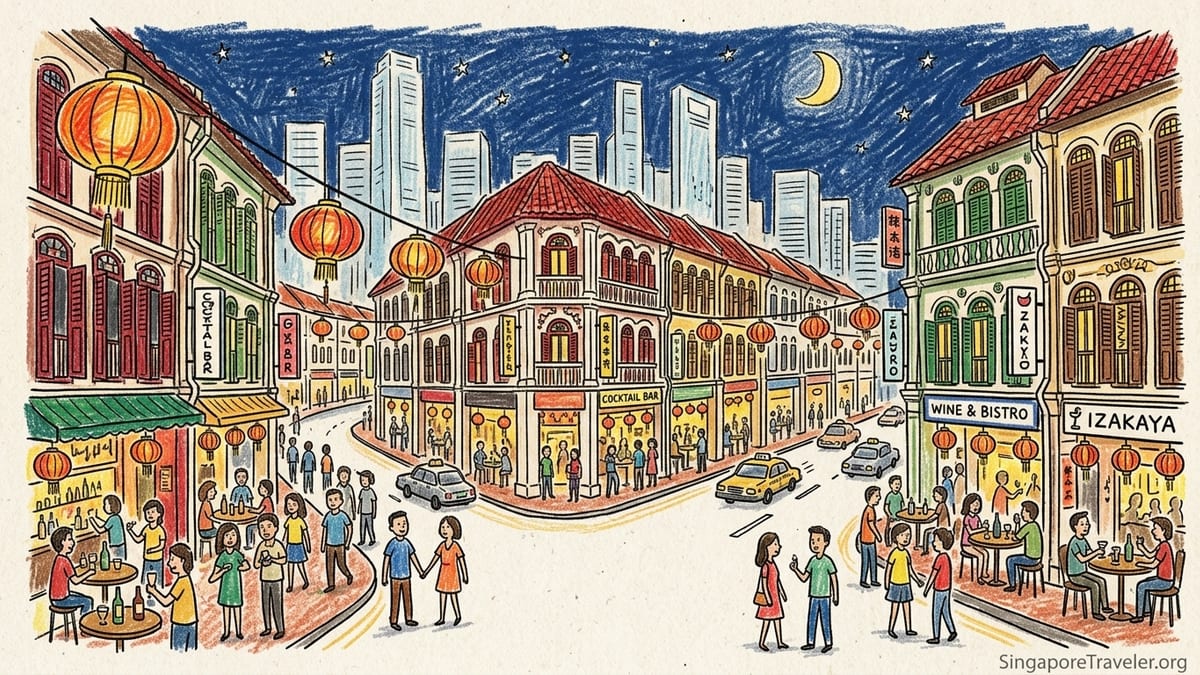
How Chinatown Transforms After Dark
Chinatown’s nightlife core stretches across several compact streets on the edge of the central business district. Ann Siang Hill and Club Street sit closest to the heart of Chinatown, while Keong Saik Road, Amoy Street and Telok Ayer run toward Tanjong Pagar and the Downtown core. Together they form a walkable grid of shophouses filled with cocktail bars, wine bars, izakayas, late-night bistros and low-key drinking dens.
The rhythm of the evening is set by office hours. Around 6.30 pm, white-collar workers stream out of nearby towers and into Telok Ayer and Amoy Street for after-work drinks. By 8 pm, Ann Siang Hill and Club Street have spilled onto the pavement, with outdoor tables packed and music drifting from bar to bar. Keong Saik builds more slowly, peaking later with a mix of destination cocktail spots, natural wine bars and buzzy restaurants.
Unlike Marina Bay, which is dominated by hotel lounges and rooftop venues, Chinatown’s bar scene is anchored in restored shophouses. Narrow staircases lead to intimate second-floor cocktail rooms, while ground-floor spaces open directly to the five-foot-way. It feels compact, lived-in and sociable. You can easily bar hop between several streets in one night, ducking into quiet side alleys when you need a break.
Closing times vary, but most serious cocktail and wine bars last orders somewhere between midnight and 1 am on weeknights, often stretching until 2 am on Fridays and Saturdays. Kitchens usually shut earlier, around 10.30 or 11 pm, though some izakayas and late-night Chinese restaurants in the wider Chinatown area keep food going later for post-bar suppers.
Ann Siang Hill & Club Street: Classic Cocktail Lane
Ann Siang Hill and Club Street form the most iconic nightlife pocket in Chinatown. By early evening, the streets begin to fill with office workers loosening their ties, expats meeting friends and visitors who have planned their night around this historic slope. Many shophouse bars push tables and barrels onto the cobblestones, so on dry nights the whole stretch turns into a semi-pedestrian drinking lane.
In recent years, a wave of modern cocktail bars has refreshed the area. Spots on and around Ann Siang now offer creative signatures built with Asian ingredients alongside the classic negroni or martini. Typical prices run about 24 to 30 Singapore dollars for house cocktails and 16 to 20 dollars for wine by the glass. Happy hour deals are still common early in the evening, with beer pints around 12 to 14 dollars and simpler highballs in the mid-teens.
The mood varies sharply from door to door. Some venues keep the music at a background level and lean on dim lighting, making them suitable for a date or catch-up conversation. Others, especially closer to the main bend where Ann Siang meets Club Street, turn the volume up and attract larger groups. On Friday nights it can feel like a street party, with people standing outside their chosen bar and talking across the lane to friends without ever sitting down.
For visitors, this is the easiest place to understand how Chinatown has reinvented itself as a nightlife district. The streets are compact, the crowd is mixed and the options range from polished cocktail bars to relaxed drinking joints where you can split a bottle of wine. Even if you do not plan a long night, it is worth walking Ann Siang from top to bottom after dark to see how each shopfront changes character.
Keong Saik Road: Hip Cocktail Bars, Wine and Late Dining
Keong Saik Road, a short walk from Outram Park or Chinatown MRT, has shifted in a single generation from red-light district to one of Singapore’s most fashionably hip streets. Today, its rows of artfully restored shophouses hold destination cocktail bars, bistros and contemporary Asian restaurants. The street feels slightly more spacious and residential than Ann Siang Hill, which gives evenings here a looser, more relaxed flow.
One of the standout trends on Keong Saik is the rise of wine-focused venues. The arrival of self-pour wine concepts, where a tasting wall lets you sample multiple labels by the 40 or 80 millilitre pour, reflects a broader shift toward casual but curious wine drinking. At these bars, you can expect two-hour free-flow tasting packages around 59 dollars per person, or you can load a card and pay by the sample. Glass pours usually begin around 16 to 18 dollars for approachable whites and reds, while better-known regions and natural wines climb toward 22 to 25 dollars.
Cocktail bars along Keong Saik combine serious technique with playful interiors, often referencing local flavours in their menus. You might find a clarified punch built around tropical fruit and jasmine, or a highball drawing on pandan and toasted coconut. Signature cocktails typically sit in the 24 to 28 dollar range, while classic builds like an old fashioned or gimlet cost a similar amount once tax and service charge are added. Expect a more destination-driven crowd here: locals in their thirties, hospitality workers on their night off and visitors who plan their stay around well-known regional bar names.
Keong Saik is also strong on dining. Many restaurants fall toward the higher mid-range, with main courses commonly in the 30 to 45 dollar bracket and chef’s tasting menus running higher. The upside is that it is easy to combine a serious dinner with a bar hop on the same street. Several kitchens keep extended hours relative to the central business district, serving food until 10.30 or 11 pm on weekends, which suits late arrivals after sightseeing or flights.
Telok Ayer & Amoy Street: After-Work Energy and Wine Bars
Where Ann Siang and Keong Saik feel like destination nightlife streets, Telok Ayer and Amoy Street are more tightly linked to the working day. Telok Ayer’s shophouses sit just off the Downtown Core’s glass towers, and Amoy Street runs parallel behind them. When the financial district clocks off, these streets make a natural first stop for colleagues who want to unwind without travelling far.
The bar mix here leans toward polished yet approachable venues. Along Amoy Street you will find natural wine bars pouring by the glass from a rotating cast of small producers, bistros with strong by-the-glass lists and casual spots where you can match a bottle of wine with charcuterie or bar snacks. Expect a broad spread of prices: house wines by the glass start somewhere around 16 to 18 dollars, while more ambitious natural or low-intervention wines hit the low-20s and up. Bottles begin near 80 dollars and climb quickly for prestigious regions.
Cocktail bars in the Telok Ayer pocket often double as restaurants or izakayas, which helps keep the atmosphere relaxed and makes them good for mixed groups. It is common to see people ordering a round of highballs or signatures with plates of gyoza, yakitori or Southeast Asian-inspired bar food. Beer remains a staple here too, especially among office groups. Draft macro lagers in pint size often sit between 14 and 17 dollars during regular hours, with happy hour prices a few dollars lower before 7 pm.
Because many venues here rely on office custom, Telok Ayer and Amoy Street are busiest Tuesday to Thursday from after work until about 10 pm. Fridays see more of a transition from suits to casual wear as locals arrive later and stay longer. By comparison, Mondays can feel noticeably quieter. For travellers, this ebb and flow is useful: if you want a buzzy scene without the tightly packed Club Street crush, aim for a Thursday evening here, then move uphill to Ann Siang once the night matures.
Cocktail Bars vs Wine Bars vs Casual Drinking
One of Chinatown’s strengths is the range of drinking styles in a small area. Serious cocktail enthusiasts can build a full evening around back-to-back bars known for inventive menus and skilled bartenders. These venues often feature multi-page menus sorted by flavour profile, with three to five house signatures anchoring each section. Expect table service, low lighting, bar snacks and servers who will happily talk you through the ingredients or build an off-menu classic to your taste.
Wine bars serve a different crowd. Around Keong Saik and Amoy Street especially, you will find spaces that feel less like traditional bars and more like living rooms with good soundtracks. Chalkboard lists change weekly, focusing on small vineyards, orange wines or lesser-known European regions. Service is typically more casual than at cocktail dens, and it is normal to work through several half-glasses to explore the list. These venues suit groups that want conversation first, drinks second, and they are particularly popular on midweek evenings.
Casual drinking in Chinatown often revolves around hybrid venues: bistros that pour both cocktails and wine, or spots that build their trade on craft beer while still offering a credible negroni. On Club Street and Ann Siang, the most boisterous joints may not even have a strong identity beyond being a fun place to order a bucket of bottled beer or a shared jug of simple cocktails before moving elsewhere. Prices here are slightly lower than at top-tier bars. Small beer bottles often go for 10 to 12 dollars and basic mixed drinks in plastic cups for 15 to 18 dollars, especially during promotions.
For visitors who do not obsess over mixology or wine regions, this layered mix means you can slide between scenes based on your mood. Start with a destination cocktail at a serious bar, move to a wine bar for a glass with cheese, then end at a high-energy Club Street venue where the music is louder and the crowd less self-conscious. All of this can happen within a ten-minute walk, which is part of Chinatown’s enduring appeal.
Late-Night Restaurants and Quieter Date-Night Options
While Chinatown’s reputation today leans heavily on its award-winning bars, it remains a strong dining district. Around the nightlife core, late-opening restaurants keep kitchens running for guests who treat food as the main event and drinks as accompaniment. These range from Japanese izakayas at the Tanjong Pagar end of Keong Saik to modern European bistros closer to Ann Siang, with menus built for sharing and snacking.
For late-night eating, it pays to look slightly beyond the exact bar streets. As the cocktail bars wind down their food service, Chinese restaurants in the wider Chinatown area stay open later, serving dumplings, stir-fries and claypot dishes to tables full of industry staff and night owls. Prices remain reasonable by Singapore standards: a plate of fried rice might cost around 10 to 15 dollars, while shared meat or seafood dishes start near 20 dollars and climb from there.
If you are seeking something quieter, especially for a date, focus on second-floor or back-lane venues with fewer seats. Intimate cocktail rooms on the upper floors of Ann Siang and Amoy Street shophouses often keep their music at a level where conversation is easy and may require only soft speaking. These spaces typically accept reservations for bar seats and some release limited walk-in capacity. Arriving early, between 6 and 7 pm, greatly improves your chances of securing a good perch without a booking.
Wine bars also work well for low-key evenings, particularly midweek. Their lighting and seating often favour two-tops and bar counters over long tables. Staff are used to guests lingering over a single bottle and a few shared plates for hours. In contrast, the buzziest Club Street spots and the most popular Keong Saik restaurants can be very loud at peak times, with music, street noise and overlapping tables combining into a lively but not especially intimate soundscape.
Reservations, Dress Codes and Typical Pricing
Across Ann Siang, Club Street, Keong Saik, Amoy Street and Telok Ayer, reservations are increasingly important, particularly on Thursday, Friday and Saturday nights. High-profile cocktail bars often release online booking slots two to four weeks in advance and fill prime times quickly. If you have your heart set on a specific venue, plan ahead. That said, many bars hold some seats back for walk-ins, especially at the counter. Showing up just after opening can secure you an hour or two before the crowd builds.
Dress codes are generally relaxed but neat. You will see plenty of office wear in Telok Ayer right after work, while Keong Saik and Ann Siang tilt more toward smart-casual in the evenings. Closed shoes, collared shirts or smart tops and non-sport shorts are usually sufficient for men, while women wear everything from sundresses to tailored trousers. Full beachwear, gym gear or flip-flops can feel out of place in the more polished cocktail dens, even if not formally prohibited.
In terms of budget, travellers should expect Chinatown’s nightlife streets to sit at the upper mid-range by Singapore standards. A crafted cocktail in a serious bar typically runs 24 to 30 dollars. Simple mixed drinks and highballs at more casual venues can come in slightly lower, from about 18 to 22 dollars. Beer lovers will find draft pints commonly priced between 14 and 18 dollars, depending on brand and happy hour timing. Wine by the glass at credible bars tends to start around 16 dollars and climbs quickly for more interesting labels.
Most venues add a standard 10 percent service charge and 9 percent goods and services tax to the menu price, so the final bill will be higher than the sticker price. Tipping on top is not expected in Singapore, though rounding up or leaving small change for exceptional service is always appreciated. Many bars have contactless payment terminals that accept major international cards and mobile wallets, which simplifies settling up after a long evening.
Where to Stay if Nightlife Matters
If your main goal in Singapore is to explore Chinatown’s bars and late-night dining, staying within walking distance makes a significant difference. The area around Keong Saik Road and Teck Lim Road has a cluster of boutique hotels housed in conserved shophouses. Rooms tend to be compact but characterful, and you can be at your first bar in under five minutes on foot. Noise can be an issue at weekends, so consider requesting a high or rear-facing room if you are sensitive to sound.
Closer to Ann Siang Hill and Club Street, you will find a handful of design-focused hotels and smaller properties tucked into side streets. These put you near both the heritage heart of Chinatown and the Downtown Core, ideal if you plan to sightsee by day and drink by night. The upside is sheer convenience: you can wander out for a nightcap without worrying about train times, and late-night suppers in the wider Chinatown area are within easy reach.
Travellers who prefer a quieter base might choose the fringe between Telok Ayer and the main Raffles Place financial district, or the Tanjong Pagar side of Chinatown. From these areas, it is an easy ten to fifteen minute walk to most nightlife streets, but your immediate surroundings are calmer after midnight. International chain hotels in these zones often come with larger rooms, pools and gyms, which can be appealing for longer stays.
Wherever you stay, the key advantage of basing yourself near Chinatown’s nightlife is flexibility. You can dip in and out of the bar scene across multiple evenings instead of compressing everything into one long night. Afternoon showers or jet lag become less of a problem when you know that a great cocktail bar or late-night restaurant is no more than a short walk from your bed.
The Takeaway
Chinatown today offers one of Singapore’s densest concentrations of bars and evening dining, with Ann Siang Hill, Club Street, Keong Saik Road, Amoy Street and Telok Ayer each contributing a distinct mood. From award-winning cocktail dens to self-pour wine bars and casual beer joints, the district supports a wide range of drinking styles, budgets and energy levels.
The streets come alive in phases: Telok Ayer and Amoy Street catch the first after-work wave, Ann Siang and Club Street peak on weekend evenings with pavement crowds, and Keong Saik holds a slightly more relaxed but equally ambitious bar and dining scene. Reservations help on busy nights, but spontaneous bar hopping is still very possible if you arrive early or remain flexible.
For travellers who care about nightlife, staying within or just beside this precinct turns Singapore into a compact, walkable bar city. You can pair hawker-centre lunches with shophouse cocktails, explore natural wine lists between temple visits and finish the night with dumplings under neon signs. Chinatown’s after-dark transformation is no longer a side note to its heritage; it is a defining part of the district’s story.
FAQ
Q1. Which Chinatown streets are liveliest after office hours?
Ann Siang Hill, Club Street, Amoy Street and Telok Ayer are busiest right after work, while Keong Saik Road builds later into the evening, especially on Thursdays and Fridays.
Q2. Do I need reservations for bars in Ann Siang and Keong Saik?
Reservations are strongly recommended for popular cocktail and wine bars on Thursday to Saturday nights, especially between 7.30 and 10 pm. Walk-ins are usually possible early in the evening or at more casual venues.
Q3. How much should I budget for a night out in Chinatown’s bar streets?
Plan around 24 to 30 Singapore dollars per crafted cocktail, 16 to 22 dollars for wine by the glass and 14 to 18 dollars for a draft beer pint, plus tax and service charge.
Q4. Are there quieter date-night bars in Chinatown?
Yes. Look for smaller second-floor cocktail bars and wine bars on Ann Siang Hill, Amoy Street and Keong Saik Road, which usually keep music lower and feel more intimate than the loudest street-level joints.
Q5. What time do bars usually close in this part of Singapore?
Most cocktail and wine bars in Chinatown wind down around midnight to 1 am on weekdays and closer to 1 or 2 am on weekends, with kitchens often closing earlier at about 10.30 or 11 pm.
Q6. Is there a dress code for Chinatown’s bars and late-night restaurants?
Dress is generally smart-casual. Office attire is common after work, and neat shorts or dresses are fine. Beachwear, gym clothes and flip-flops can feel out of place at higher-end venues.
Q7. Where should I stay if I want to be close to the nightlife?
Boutique hotels near Keong Saik Road or Ann Siang Hill put you within a few minutes’ walk of most bars. Larger chain hotels in Tanjong Pagar or near Telok Ayer offer quieter nights but are still close.
Q8. Are there good late-night food options near the bars?
Yes. While bar kitchens close earlier, the wider Chinatown area has Chinese restaurants, noodle shops and hawker stalls that open later, making it easy to find dumplings or stir-fries after drinks.
Q9. Is Chinatown’s nightlife area safe to walk around at night?
Chinatown is generally considered safe, with well-lit streets and regular crowds. Normal big-city precautions apply, such as watching your belongings and moderating your alcohol intake.
Q10. Can I easily bar hop between Ann Siang, Keong Saik and Telok Ayer?
Yes. The streets sit close together, and you can walk between Telok Ayer, Amoy Street, Ann Siang Hill, Club Street and Keong Saik Road within 10 to 20 minutes, making bar hopping straightforward.