


The Singapore River curves through the heart of the city, and along one compact stretch you get three very different neighbourhoods: Boat Quay, Clarke Quay and Robertson Quay. All are officially managed under the Singapore River One precinct, yet each quay now plays a distinct role, from after-work drinks and clubbing to lazy brunches and riverside strolls. For visitors, the challenge is not whether to stay by the river, but which quay to pick for the right mix of nightlife, dining, hotel style and peace and quiet.
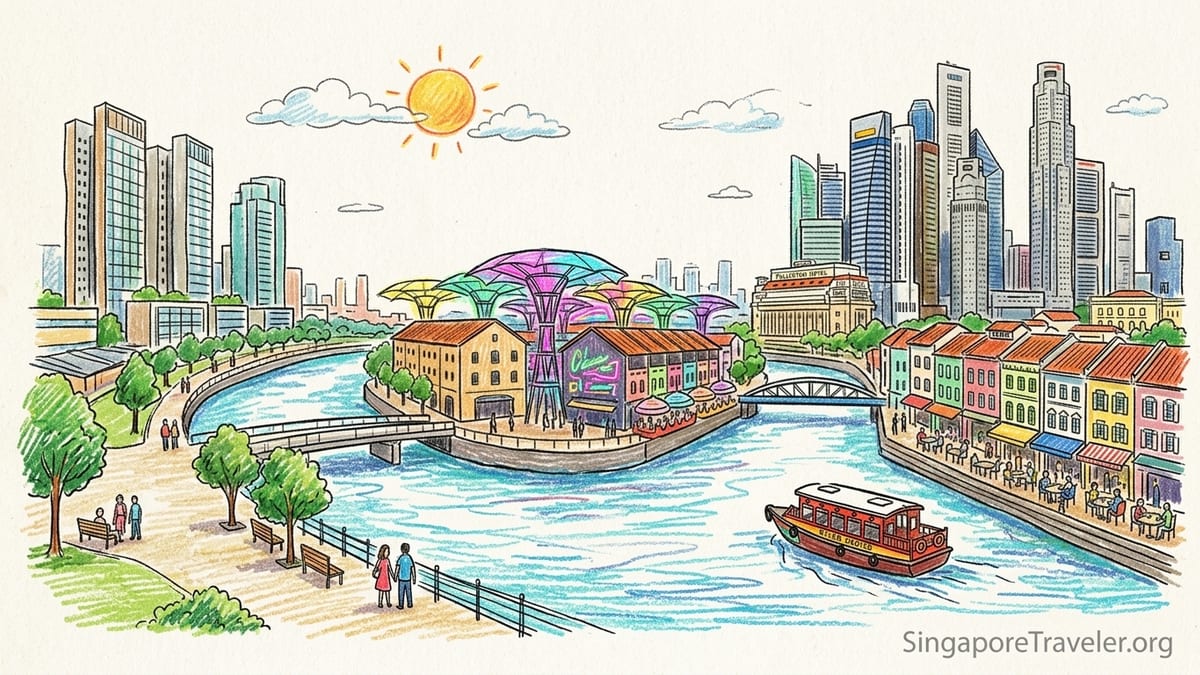
Singapore River at a Glance: One Precinct, Three Personalities
The Singapore River today is a carefully curated waterfront that has shifted from cargo and godowns to restaurants, bars, hotels and walking paths. Urban planners, through Singapore River One, officially group the area into three quays: Boat Quay closest to the financial district, Clarke Quay in the middle as the main entertainment hub, and Robertson Quay further upstream with a more residential and relaxed feel. They sit along a roughly 3 kilometre riverfront that is fully walkable, with promenades and underpasses linking one quay to the next.
Boat Quay fronts the skyscrapers of Raffles Place and the civic district. It is lined with low, colourful shophouses that now hold seafood restaurants, izakayas and casual bars, many with outdoor tables directly on the river. Clarke Quay is the neon centre in the middle, with restored warehouses under a canopy that shelters a dense cluster of bars, clubs and themed restaurants where the music typically goes late into the night. Robertson Quay, by contrast, has wider promenades shaded by trees, condo towers behind, and a mix of neighbourhood cafes, wine bars and upmarket but low-key restaurants that attract residents as much as tourists.
Although each quay has its own character, they run into each other without hard borders. In practical terms, that means you can sleep in quiet Robertson Quay, stroll 10 to 15 minutes downstream for a cocktail in Clarke Quay, and continue another 10 minutes to Boat Quay for supper with a skyline view. Water taxis and river cruises add another layer of connectivity, but for most visitors the simple riverside walk is the biggest draw.
Getting Around: MRT Access and Walking Distances
For public transport, Clarke Quay comes out slightly ahead. Clarke Quay MRT station sits immediately behind the riverfront on the North East Line, and the Fort Canning station on the Downtown Line is roughly a 5 minute walk from the bars and restaurants. In practice, many hotels market themselves as being “at Clarke Quay” because they are within a 5 to 8 minute walk of these stations, which makes sightseeing straightforward for visitors who rely on trains.
Boat Quay does not have its own named station, but it is effectively on the doorstep of Raffles Place MRT, where the East West and North South Lines intersect. From the riverfront terraces at Boat Quay, it is about 3 to 5 minutes on foot to the station exits through the CBD streets. This is convenient if you plan to crisscross the city for day trips, such as heading out to Changi Airport, Jurong or the heartlands on the green line, then returning for dinner by the river.
Robertson Quay is slightly less immediate in MRT terms but still well connected. The Fort Canning station on the Downtown Line is around 8 to 12 minutes’ walk from most Robertson Quay hotels, depending on where you are along the river. With the opening of the Thomson East Coast Line, Havelock and Great World stations also serve the upper reaches of the quay, each roughly a 10 minute stroll from the waterfront. Many hotels and serviced apartments here advertise a 10 minute walk to Havelock station or provide a shuttle at peak hours.
In terms of walking distances between the quays themselves, the numbers are manageable. From the centre of Clarke Quay to the cluster of restaurants at Boat Quay is around 800 metres, or about 10 minutes at a relaxed pace along the riverside. From Clarke Quay in the other direction upstream to Robertson Quay is around the same. Visitors often cover the full stretch from Boat Quay to the far end of Robertson Quay in roughly 25 to 30 minutes, stopping for photos on the bridges and at the statue of Sir Stamford Raffles near Boat Quay.
Boat Quay: CBD Views, After-Work Drinks and Riverside Dining
Boat Quay is the quay that feels most closely tied to the business district. On one side of the river you see the low shophouses with their five foot ways and tiled roofs, and on the other the glass and steel towers of Raffles Place and Marina Bay. The effect at dusk, when office lights come on and the sky begins to darken, is particularly striking. Many visitors book riverside tables here specifically to eat with a view of the Fullerton Hotel, the Asian Civilisations Museum and the skyline stretching towards Marina Bay.
Dining at Boat Quay ranges from tourist friendly seafood spots to more focused bars and bistros. A cluster of seafood restaurants display large tanks with live crabs and lobsters and actively tout for customers. Prices for signature dishes such as chilli crab, black pepper crab or cereal prawns can be high compared with hawker centres, with whole crab dishes often running to several tens of Singapore dollars per person once you include side dishes and drinks. In between these, there are more targeted eateries serving everything from Japanese izakaya fare to modern European plates and tapas, where a main course might cost in the range of 25 to 40 Singapore dollars.
The atmosphere at Boat Quay is busy in the early evening when office workers come down for happy hour. Many bars advertise drink specials, such as draft beers around 10 to 12 Singapore dollars or two for one cocktails before 8 pm, which brings in a mixed crowd of locals, expats and tourists. Noise levels are moderate compared with Clarke Quay, with more of a buzz from conversation and music at sensible volumes rather than full club sound systems. By midnight, the area has usually calmed, although a few bars keep going later on weekends.
Accommodation right on Boat Quay itself is limited and tends to be in small boutique hotels or hostels housed in shophouses. Rooms here can be compact, but you are trading space for location. Because of the nightlife below, lower river facing rooms can pick up some street noise, especially on Fridays and Saturdays. That said, Boat Quay works well for travellers who want to maximise time in the CBD, visit museums like the National Gallery, and still have a strong sense of heritage shophouse streetscapes on their doorstep.
Clarke Quay: Nightlife, Entertainment and Late-Night Energy
Clarke Quay has long been marketed as Singapore’s central nightlife district on the river. The restored warehouse blocks under a colourful canopy hold a dense mix of nightclubs, karaoke lounges, live music bars, themed restaurants and casual drinking spots. On a typical Friday or Saturday night, music pours out of open fronts, neon signs glow overhead, and the walkways stay crowded well past midnight. For many visitors, this is the place in Singapore where you can most easily hop from one bar to another without ever crossing a major road.
Prices in Clarke Quay reflect its position as a prime nightlife zone. Cover charges at clubs can include one or two drinks, and cocktails at sit down bars commonly start in the high teens to low twenties in Singapore dollars, with premium spirits higher. Happy hour promotions are common early in the evening, and some venues offer beer buckets or simple house pours at more modest prices to entice groups. Food offerings skew towards international concepts such as American bar food, hotpot chains, modern Asian plates and large sharing platters that suit groups of friends or colleagues out for the night.
In terms of noise and late night activity, Clarke Quay is the rowdiest of the three quays. Bass from clubs and amplified music from bars can be heard across the river, and the crowds concentrate around the central fountain square and under the canopy. On weekends and on the eve of public holidays, it is normal to see queues at popular venues after 10 or 11 pm, and taxis lining up along the adjacent roads to ferry people home in the small hours. Families pushing strollers might find the scene a little intense late at night, but earlier in the evening there is usually a mix of tourists, families and groups of friends taking river cruises or dining outdoors.
Clarke Quay is also strong on hotel choice. Paradox Singapore Merchant Court sits directly beside the river and almost on top of Clarke Quay MRT station, making it one of the most convenient riverside options for those who want nightlife downstairs and fast subway access. Other nearby properties, such as Park Regis, Swissotel Merchant Court and various mid scale hotels along Hong Kong Street and Hill Street, position you within a few minutes’ walk of the river while remaining a little insulated from the loudest music. Expect to pay mid to upper mid range nightly rates for standard rooms, with premiums on weekends and during major events.
Robertson Quay: Quiet Cafés, Residential Vibe and Riverside Hotels
Upstream from Clarke Quay, the river broadens a little and the pace slows. Robertson Quay is the largest and most upstream of the three riverfront quays and has, over time, become a high end residential and hotel district. The promenade here feels wider and more spacious, with mature trees and public art pieces dotted between benches and outdoor dining terraces. Behind the riverfront sit condominium towers and low rise complexes, giving the area a lived in neighbourhood feel rather than a pure entertainment zone.
Dining in Robertson Quay is anchored by cafes, modern bistros and a handful of destination restaurants. Weekend brunch is a particular draw, with places serving all day breakfast plates, grain bowls, coffee from specialty roasters and pastries. You will find local brands offering menus that span eggs benedict and pancakes to plant forward salads and pastas, with prices on par with other central Singapore cafes. Riverside restaurants cover cuisines such as Italian, Mediterranean, Japanese and contemporary Asian, and are popular with residents as well as hotel guests for long, relaxed dinners with a bottle of wine rather than quick bites before clubbing.
Hotels in Robertson Quay lean towards the boutique and lifestyle segment. InterContinental Singapore Robertson Quay markets itself as an urban retreat with residential inspired interiors, emphasising quieter sophistication over spectacle. Rooms here tend to be compact but well designed, with thoughtful amenities and views over the river or city. Nearby, other properties and serviced residences cater to longer stays, with studio and one bedroom layouts that appeal to business travellers and families who prefer a kitchen and more space. Nightly rates here are often similar to central city hotels, but you are paying for a more laid back atmosphere and river access.
The overall noise profile at Robertson Quay is significantly calmer than Clarke Quay and generally softer than Boat Quay. While there are bars and wine lounges, the emphasis is on conversation and dining rather than dancing and late night crowds. After 11 pm on most nights, the riverfront promenade is more likely to be used by joggers, dog walkers and couples out for a stroll than by groups of revellers. For light sleepers, this makes Robertson Quay one of the most comfortable bases along the Singapore River.
Eating and Drinking: Pricing, Atmosphere and What to Expect
Across all three quays, prices for food and drinks are higher than in Singapore’s hawker centres and heartland kopitiams, reflecting the central location and waterfront setting. Visitors on a budget might choose to eat at nearby malls or food courts at lunchtime and treat the riverfront as an evening splurge. That said, there are still meaningful differences from quay to quay that shape the dining experience and how far your budget stretches.
Boat Quay tends to have a strong focus on seafood and tourist friendly set menus, especially along the most prominent stretches of river. Staff frequently stand outside inviting passersby to sit down, and menus often list prices by 100 grams for seafood items. It is worth clarifying the total price for any whole fish or crab dish before confirming an order, to avoid bill shock. Outside of the seafood strip, Boat Quay has reasonably priced pubs and simple eateries where a main course might run in the mid 20s in Singapore dollars and a pint of beer during happy hour can still be under 12 Singapore dollars.
Clarke Quay’s food is intertwined with its nightlife. Many venues operate as restaurants by day and clubs or bars by night, which means menus lean towards shareable dishes that pair well with alcohol, like sliders, wings and platters of skewers. Prices are influenced by entertainment value as much as ingredients, so a burger or pasta dish might cost slightly more here than at a similar restaurant away from the river. Drinks are the main spending category: mixed drinks using international spirit brands and elaborate presentations are common, and venues rely on these margins to support live music, DJs and entertainment programming.
In Robertson Quay, the food scene centres on quality brunches, cafe fare and mid range restaurants where locals are regulars. You are more likely to linger over a flat white, a slice of cake and a laptop in the afternoon, or share a three course Italian meal in the evening, than to down shots at a bar. Prices for coffeehouse items are similar to other central city cafes, while dinner at nicer restaurants might see mains in the 25 to 40 Singapore dollar range, with house wines by the glass at moderate prices for Singapore. Because a large share of diners are residents, there is a stronger incentive for consistency and good value than for one off tourist experiences.
All three quays have convenience stores nearby for quick snacks, bottled water and basic essentials, and there are food courts in adjacent malls such as Clarke Quay Central, Great World and the Raffles Place area. This makes it easy to balance occasional splurge meals with lower cost options during a stay, especially for families or long term visitors.
Where to Stay: Hotels, Noise and Choosing Your Base
When picking a hotel along the Singapore River, the main trade offs are between direct river frontage, noise levels and ease of access to MRT stations. Boat Quay, with its historic shophouses, has fewer full service hotels and more small scale guesthouses and boutique properties. These can put you right on the river, but some lack amenities like pools and full gyms, and the street level nightlife can be heard in certain rooms. Boat Quay suits travellers who prioritise character, heritage streetscapes and CBD proximity, and who are comfortable with modest room sizes and some evening noise.
Clarke Quay has the widest variety of hotel types, from large riverfront properties with pools looking over the water to mid range chain hotels on the fringes. Staying here gives you nightlife at your doorstep and quick access to the North East and Downtown MRT lines. The trade off is that even well insulated rooms can pick up distant bass on the loudest weekends, and the immediate surroundings feel busy well into the night. For younger travellers, groups of friends and those who see nightlife as a key part of their trip, this energy is a feature rather than a bug.
In Robertson Quay, hotels and serviced residences are woven into a more residential setting. Properties like InterContinental Singapore Robertson Quay emphasise design, a calm lobby atmosphere and services aimed at longer staying guests, including good gyms, lap pools and quiet corners for remote work. Noise from bars is more contained and typically ends earlier than in Clarke Quay, and there is less street level foot traffic at midnight. Families with young children, business travellers on multi night stays, and couples seeking a romantic but low key base often gravitate towards this stretch of the river.
In terms of price, there is overlap across the three quays, and daily rates fluctuate with demand. In general, small shophouse hotels at Boat Quay can be cheaper in absolute terms but with simpler facilities. Clarke Quay hotels often command a premium on weekends and during major events because of nightlife demand and direct MRT access. Robertson Quay’s lifestyle hotels may be priced similarly to central business hotels, but offer a different value proposition centred on space, design and a quieter riverfront experience.
The Takeaway: Which Quay Is Best for You
For visitors choosing between Boat Quay, Clarke Quay and Robertson Quay, the decision often comes down to how much nightlife you want, how sensitive you are to noise, and whether you prioritise MRT convenience or a calmer, more residential feel. Because the three quays are within walking distance of each other, you can always dine or drink in one and sleep in another, but picking the right base makes your everyday routines smoother.
If nightlife is your highest priority, Clarke Quay is the obvious choice. You can step out of most hotels and be among bars and clubs within minutes, and you will not need to worry about transport home at the end of the night. The trade off is a busier atmosphere and higher chance of street noise late into the evening, especially on Fridays and Saturdays.
Couples looking for a romantic stay with riverside walks may find Robertson Quay the best fit. The quieter promenades, brunch cafes, wine bars and design focused hotels create a more intimate atmosphere. It is still easy to walk or take a short taxi to Clarke Quay for a big night out, then return to a quieter room by the water. Families, especially those with younger children, often prefer Robertson Quay for the same reasons, adding in the benefit of wider pavements and less crowded access to playgrounds and parks nearby.
Travellers who want to dine by the river while watching the city’s financial and civic skyline may gravitate towards Boat Quay. It is a strong choice for dinner with visiting friends, business travellers who have meetings in the CBD by day, and anyone who enjoys the contrast between heritage shophouses and modern towers. For a quieter base with easy access to both sightseeing and modest nightlife, a common strategy is to stay slightly away from the noisiest stretches, such as on the edges of Clarke Quay or in Robertson Quay, and then use the river promenades to explore the entire Singapore River precinct on foot.
FAQ
Q1. Which quay is best for nightlife?
Clarke Quay is best if nightlife is your priority, with the highest concentration of bars, clubs and late night venues, plus crowds and music that run well past midnight on weekends.
Q2. Which area is quietest for sleep sensitive travelers?
Robertson Quay is generally the quietest, with a more residential feel, fewer large clubs and a calmer riverside promenade at night compared with Clarke Quay and Boat Quay.
Q3. Where should families with children stay along the river?
Families often prefer Robertson Quay, thanks to its wider walkways, quieter atmosphere, nearby parks and family friendly cafes, while still being a short taxi or walk from central attractions.
Q4. Which quay has the best access to MRT stations?
Clarke Quay has the most immediate MRT access, with Clarke Quay station on the North East Line and Fort Canning station on the Downtown Line just a few minutes’ walk from the riverfront.
Q5. Is Boat Quay very expensive for dining?
Boat Quay has some higher priced seafood and tourist oriented menus, especially for crab and other live seafood, but also offers mid range pubs and eateries where prices are more moderate.
Q6. How long does it take to walk between Boat Quay and Robertson Quay?
Walking the full riverside stretch from Boat Quay through Clarke Quay to the far end of Robertson Quay typically takes around 25 to 30 minutes at a relaxed pace.
Q7. Which quay is best for couples on a short city break?
Couples often choose Robertson Quay for its quieter, more intimate ambiance and stylish hotels, while heading to Clarke Quay or Boat Quay in the evenings for livelier dinners or drinks.
Q8. Are there good budget options near the quays?
Budget conscious travelers can look at smaller shophouse hotels and hostels around Boat Quay and on streets behind Clarke Quay, trading some space and amenities for central river access.
Q9. Is it safe to walk along the river at night?
The Singapore River promenades are generally well lit and busy in the evening, and it is common to see joggers, diners and families out late, though usual city awareness is still sensible.
Q10. If I want a quieter base but easy access to nightlife, where should I stay?
A practical compromise is to stay in Robertson Quay or on the fringes of Clarke Quay, where nights are calmer, then walk 10 to 15 minutes to Clarke Quay’s bars when you want more action.