


Singapore River is one of the most confusing areas for booking a hotel. Booking sites often bundle Robertson Quay, Clarke Quay, Boat Quay and River Valley into a single catch-all "Singapore River" label, yet these stretches feel very different on the ground. Noise levels, transport connections, river views and prices can vary dramatically within a 15-minute walk. This guide breaks down what each part of the river is really like, with specific hotel examples and practical tips so you can choose the right base for your trip.
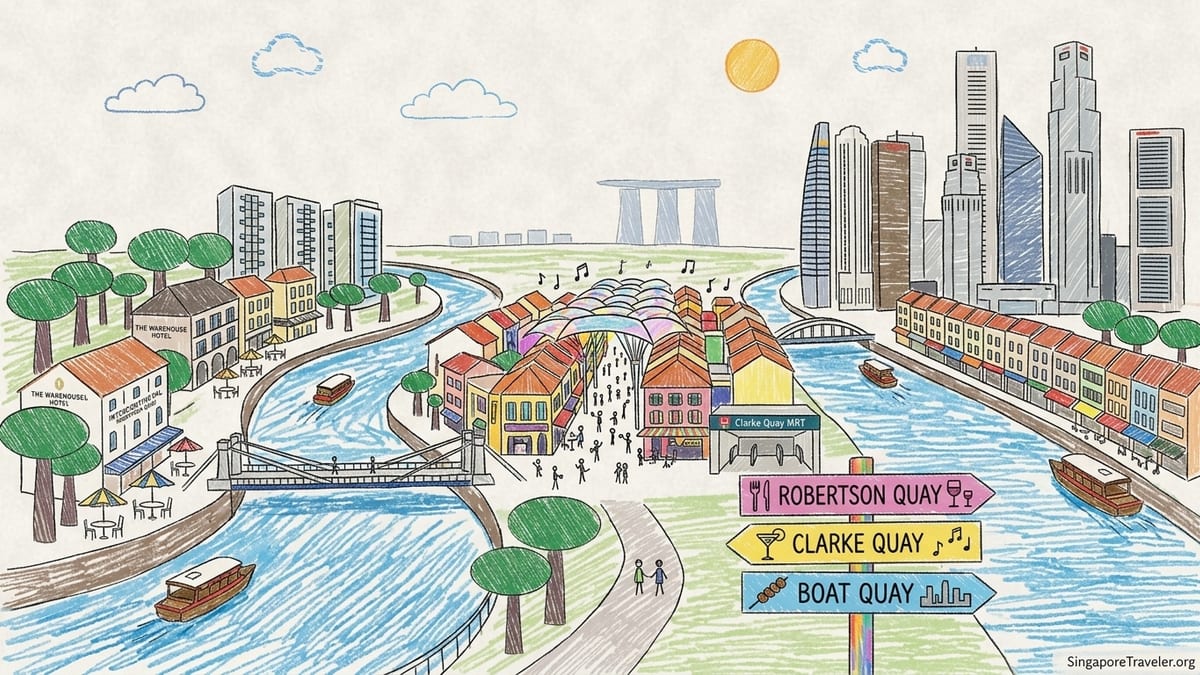
Understanding the Singapore River Neighbourhoods
The Singapore River runs roughly from the quieter, more residential Robertson Quay down past the nightlife-heavy Clarke Quay and then into Boat Quay beside the Central Business District. A step inland from the water, Havelock Road and the broader River Valley area are lined with larger hotels that trade direct riverfront views for calmer streets and slightly better value. On a map these areas blur together, but walking them feels very different depending on where you are staying.
For example, a boutique stay at The Warehouse Hotel or InterContinental Singapore Robertson Quay puts you in a subdued, design-conscious part of the river where most ground-floor tenants are cafés, wine bars and restaurants with outdoor terraces rather than nightclubs. In contrast, a room at Paradox Singapore Merchant Court at Clarke Quay or a former Novotel-style tower nearby places you above or next to packed bars, live music venues and late-night crowds. Both are on the river, but the experience is not interchangeable.
Boat Quay, just downstream from Clarke Quay, is a narrow strip of conserved shophouses popular with tourists and office workers from the nearby CBD. It has some of the most budget-friendly river-facing rooms in central Singapore, but space is tight and road noise is more noticeable. A few blocks back from the water, the Havelock and River Valley corridor hosts bigger properties such as Grand Copthorne Waterfront and Four Points by Sheraton Singapore, Riverview that appeal to families and conference travellers who want facilities and reasonable rates more than they want to be right in the nightlife.
Because booking sites often show all of these hotels under a single “Singapore River” or even “Clarke Quay” heading, it is worth zooming into the map before you book. A difference of 800 metres can mean the gap between walking out into a club cluster at midnight and stepping out onto a quiet riverside promenade where the loudest sound is clinking cutlery from nearby restaurants.
Robertson Quay: Quiet Riverside for Couples and Longer Stays
Robertson Quay sits at the upriver end of the Singapore River corridor and is the calmest of the three quays. The waterfront here is broader and more residential, with condominium blocks, low-rise restaurants and a smattering of upscale hotels. Unlike Clarke Quay, there are no major nightclubs and relatively few bars open into the early hours. Noise from traffic is also lower, since the main riverfront path is pedestrian and the main roads are set further back.
The hotel stock reflects this more relaxed character. Design-forward properties such as The Warehouse Hotel and InterContinental Singapore Robertson Quay lean into a stylish but homely feel, with compact rooms but thoughtful common spaces and excellent dining. Mid-range options like M Social Singapore and Studio M provide loft-style rooms that often appeal to couples or solo business travellers looking for somewhere atmospheric rather than resort-like. Reviews consistently describe the area as quiet and pleasant for evening strolls along the river, with enough cafés and wine bars that you never feel stranded.
In exchange for the calm atmosphere, you sacrifice direct MRT convenience. Most Robertson Quay hotels involve a 10 to 15 minute walk to Fort Canning, Great World or Havelock MRT stations, depending on where exactly you stay. For instance, from Grand Copthorne Waterfront on Havelock Road it is roughly that distance to either Great World or Havelock station on the Thomson-East Coast Line, a fair walk in Singapore’s humidity for some guests but manageable for most reasonably fit travellers. Taxi and ride-hail availability is good, but you will not have a station at your doorstep.
Robertson Quay suits couples who value riverside ambience and dining over clubbing, remote workers or business travellers staying several nights, and families with older children who want a more grown-up, low-key base. It works less well if you plan to use the MRT for every journey or if you expect to return home after the last train and still have nightlife outside your door.
Clarke Quay: Nightlife Hub With Strong MRT Access
Clarke Quay is Singapore’s most concentrated nightlife district on the river. Reimagined warehouses and shophouses are packed with bars, themed clubs, casual restaurants, karaoke spots and late-night eateries. On weekend evenings, especially Fridays and Saturdays, the area can be very busy, with music spilling from venues into the covered central courtyard and onto the riverfront. If you like a lively atmosphere, this can be energising. If you are sensitive to noise, it can be a serious drawback.
The key advantage of Clarke Quay is transport. Clarke Quay MRT station on the North East Line sits practically underneath the mall across from the river, and many hotels are within a 3 to 8 minute walk of the station. From here it is just one stop to Dhoby Ghaut, a major interchange that connects three MRT lines, which makes sightseeing across the city straightforward. Hotels such as Paradox Singapore Merchant Court, Park Regis Singapore and some smaller boutique properties around Hong Kong Street benefit from this connectivity while still being near the river.
In terms of pricing, Clarke Quay typically runs more expensive than Boat Quay and often more than Havelock or basic Robertson Quay properties, largely because of its central location and easy MRT access. Mid-range patterned-tower hotels with pools and gyms can be common here, and rates can spike during major events or holidays. You are paying a premium to be able to walk out of your lobby and straight into the city’s bar cluster, and to get around town mostly by MRT rather than taxis.
Clarke Quay works well for nightlife-focused travellers, younger couples, and first-time visitors who want to minimise transport planning. Families with young children should think carefully about room placement and timing: street-facing rooms, lower floors and river-view rooms right over the bars can pick up bass noise well after midnight on busy nights. If you stay here with kids, consider asking the hotel for a higher floor facing away from the central entertainment complex.
Boat Quay: Budget-Friendly CBD Access and Compact Rooms
Boat Quay stretches along a bend of the river closer to Singapore’s financial core. Conserved shophouses, many with outdoor seating, host a mix of tourist restaurants, bars and offices that cater heavily to the CBD lunch crowd and after-work drinks. The atmosphere is more linear and compressed than Clarke Quay, with a row of riverfront terraces on one side and the bustling roadway and tall office towers on the other. The result is that space is tight, and so are many of the hotel rooms.
Accommodation around Boat Quay often takes the form of small boutique hotels or budget chains converted from shophouses, especially along streets like Circular Road and Carpenter Street. Rooms here can be significantly smaller than in the larger hotels upriver and may lack full-service facilities such as pools or gyms. On the upside, nightly rates can be lower than in Clarke Quay while still placing you within walking distance of key downtown sights and offices. Many properties market themselves strongly on value and location rather than amenities.
Transport is slightly more fragmented than at Clarke Quay but still good. Boat Quay sits roughly between Clarke Quay and Raffles Place MRT stations, with City Hall also within walking distance for some streets. In practice, this means you may walk 8 to 12 minutes to whichever station best suits your day’s itinerary, but you also have the option of simply walking to destinations like the Asian Civilisations Museum, parts of Marina Bay or Chinatown without using the train at all.
Boat Quay suits budget-conscious travellers who prioritise location over space, such as solo travellers, couples planning to be out most of the day, or business visitors needing quick access to the CBD. Light sleepers should be aware that many rooms are close to both nightlife and busy roads; even if bars wind down, delivery trucks and early commuters can add to the noise. If quiet is a priority, consider requesting an interior-facing room or choosing another stretch of the river.
Havelock & River Valley: Larger Hotels Away From the Party
Set a block or two back from the river, the Havelock and River Valley corridor is characterised by tower-style hotels and mixed-use developments along wide arterial roads. Properties such as Grand Copthorne Waterfront, Four Points by Sheraton Singapore, Riverview, Furama RiverFront and several long-stay residences offer more rooms, larger lobbies and fuller facilities than most shophouse conversions. Pools, gyms, conference floors and family rooms are common, and some hotels have extensive all-day dining.
The trade-off is that you are not directly immersed in the riverfront buzz. Many of these hotels are either facing the river at a slight distance or oriented towards the main road, so not every room has a water view. You might enjoy partial skyline and river glimpses from higher floors, while lower floors look onto neighbouring buildings or trees. The upside is that noise from nightlife is lower, and streets are generally quieter at night compared with Clarke Quay or the core of Boat Quay.
Recent MRT expansions have made this stretch more attractive. The opening of Havelock and Great World stations on the Thomson-East Coast Line means that hotels that once required a taxi or long bus ride now sit within about a 10 minute walk of rail access, depending on the exact property. This puts you a couple of stops from Orchard Road in one direction and straight down towards Marina Bay in the other, which improves the value equation significantly for travellers who do not mind a short daily walk.
Havelock and River Valley tend to suit families needing larger rooms and a pool, tour groups and conference attendees, as well as travellers who like the idea of being slightly removed from the noisiest nightlife while still a pleasant riverside walk from Robertson or Clarke Quay. If your priority list runs "space, facilities, reasonable price" ahead of "step straight into the bar cluster," this corridor is worth serious consideration.
Noise, Views and Price: How the Areas Really Compare
When choosing where to stay along the Singapore River, three factors require particular scrutiny: noise, views and price. Noise is the most commonly misunderstood. Clarke Quay is significantly louder on weekend nights than most of Robertson Quay or Havelock, due to its concentration of clubs and late-night bars. Boat Quay can also be noisy, but the sound there often comes from open-air bars and traffic rather than large indoor clubs, and the atmosphere tends to quieten a bit earlier on weeknights.
Robertson Quay and much of the Havelock stretch remain relatively calm after dinner service, with people strolling along the promenade or lingering at restaurants rather than crowding into loud venues. If you are sensitive to sound, aim for these sections or request a high, non-riverfront room in Clarke Quay or Boat Quay hotels. Check recent reviews for mentions of bass noise and road traffic. It is not unusual to find reviewers praising Grand Copthorne Waterfront, The Warehouse Hotel or InterContinental Robertson Quay for their peaceful ambience despite being close to central Singapore.
River views are not guaranteed just because a hotel markets itself as “riverside.” Many properties have a mix of river-facing and city-facing rooms, and some large hotels in Havelock and River Valley only offer partial water views from upper floors. Robertson Quay has a higher proportion of genuinely riverside boutique hotels where room categories explicitly state river views, but inventory is limited, and rates for these rooms can be a noticeable step up. At Clarke Quay and Boat Quay, portions of the view may be blocked by bridges, malls or neighbouring buildings.
On price, Boat Quay and the back streets of Clarke Quay often host the most budget-friendly options, including compact capsule-style or windowless rooms. Havelock and River Valley can offer good value for mid-range international brands, especially outside peak dates, while Robertson Quay tends to command somewhat higher nightly rates due to its boutique feel and smaller room counts. As always, seasonal events, trade shows and holidays can temporarily flatten these differences, so treat price comparisons as general patterns rather than fixed rules.
Getting Around: MRT, Walking and Access to Key Sights
Transport convenience is a major differentiator across the four areas. Clarke Quay is the undisputed winner for direct MRT access: Clarke Quay station sits at its heart, with most riverfront hotels within a comfortable walk. From there, you are a short ride to Dhoby Ghaut, Chinatown, Little India and HarbourFront for Sentosa, which is ideal for first-time visitors relying on public transport. Many travellers choose a Clarke Quay base specifically to minimise taxi use.
Boat Quay is also well connected but with slightly more walking. Depending on your exact hotel location, you may find Raffles Place, Clarke Quay or City Hall stations are each 8 to 12 minutes away. The upside is that the area is highly walkable; Marina Bay, the Merlion Park and the Civic District are often less than 20 minutes on foot. For business travellers with meetings in the CBD, being able to walk to offices around Raffles Place and Shenton Way can matter more than MRT proximity.
Robertson Quay and the Havelock / River Valley belt sit a little further from tracks but remain practical for sightseeing. Expect daily walks of around 10 to 15 minutes to Fort Canning, Great World or Havelock stations, or to rely on buses and taxis more than someone staying at Clarke Quay. The riverside promenade, however, connects them pleasantly to Clarke Quay and Boat Quay, and many visitors happily walk 20 minutes along the water in the evening to reach restaurants or to continue onwards into Chinatown.
For key attractions, all four areas provide reasonable access. From Clarke Quay or Boat Quay, Chinatown is a 10 to 15 minute walk, Marina Bay perhaps 20 minutes, and Orchard Road a short MRT ride away. From Robertson Quay and Havelock, Orchard Road may be closer by bus or MRT, while Marina Bay takes a little longer but remains under 25 to 30 minutes in most cases. If you plan to spend full days at Sentosa or the zoo, you will be taking a mix of MRT and taxis regardless of where you base yourself along the river.
Which Area is Best for You?
For couples seeking a quieter, atmospheric stay with good dining, Robertson Quay is often the best fit. Think small design hotels, river views from selected rooms and slow walks home after dinner rather than stumbling out of a club. If your idea of nightlife is a cocktail at a hotel bar or a glass of wine by the water, you will appreciate the tone here. Just be prepared for a slightly longer walk to the MRT compared with Clarke Quay.
Nightlife-focused travellers and many first-time visitors gravitate to Clarke Quay. The combination of direct MRT access, dense bar and restaurant options, and central position between Orchard, Marina Bay and Chinatown makes it an easy all-round choice. This is where you stay if you want to try a different bar every night without planning transport, and if you value getting around the city primarily by train. The trade-offs are higher prices and more late-night noise.
Budget travellers and business visitors with meetings in the CBD may prefer Boat Quay. You get central access, walking proximity to offices and major downtown sights, and some of the more wallet-friendly room rates on the river. The compromises are small rooms, limited hotel facilities and sometimes noticeable traffic and bar noise. Light sleepers or families with young children may be more comfortable elsewhere.
Families, groups and travellers who value space and facilities over being right in the nightlife corridor are usually happiest in Havelock and the broader River Valley area. Larger hotels with pools, connecting rooms and breakfast buffets make day-to-day logistics easier, and the recent addition of nearby MRT stations has made this stretch more attractive without dramatically changing its calmer character. You will still be close enough to stroll down to the river in the evenings, but you are less likely to have thumping music beneath your window.
The Takeaway
The Singapore River is not a single, uniform hotel zone, even if booking sites treat it as one. Robertson Quay, Clarke Quay, Boat Quay and the Havelock / River Valley corridor each offer distinct balances of noise, transport, river views and price. Your experience will be very different depending on whether you choose a quiet warehouse conversion in Robertson Quay, a tower right over Clarke Quay’s nightlife, a budget shophouse beside Boat Quay’s bars, or a larger hotel just back from the river in Havelock.
Before you commit, decide what matters most: silence at night or being in the middle of the action, large rooms or a tight budget, MRT at your door or a scenic riverfront walk. Then zoom in on the map and cross-check recent guest reviews for noise and transport comments rather than relying solely on neighbourhood labels. With a bit of homework, the Singapore River can be one of the most rewarding parts of the city to stay in, putting you close to the CBD, Chinatown and Marina Bay while still giving you a sense of place along the historic waterfront.
FAQ
Q1. Is Robertson Quay really quieter than Clarke Quay at night?
Yes, generally Robertson Quay is noticeably quieter than Clarke Quay. It has more restaurants, cafés and wine bars and far fewer large clubs, so while there is a pleasant evening buzz, the loud music and big late-night crowds are concentrated downstream at Clarke Quay.
Q2. Which area has the best MRT access along the Singapore River?
Clarke Quay has the best direct MRT access, with a station almost on the riverfront and many hotels within a short walk. Boat Quay is in between several stations, while Robertson Quay and Havelock / River Valley typically involve a 10 to 15 minute walk to Fort Canning, Great World or Havelock stations.
Q3. Where should budget travellers stay: Clarke Quay or Boat Quay?
Boat Quay usually offers more budget-friendly rooms, especially in compact shophouse hotels and small chains on the back streets. Clarke Quay tends to command higher rates due to its prime nightlife location and very convenient MRT access.
Q4. Are river-view rooms worth paying extra for?
For many travellers, yes, but it depends on your priorities. A true river view can make even a small room feel special, particularly in Robertson Quay. However, in some larger hotels only a portion of rooms face the water and views can be partially blocked, so read room descriptions carefully before paying a premium.
Q5. Which area is best for families with young children?
Havelock and the wider River Valley area are often the most comfortable for families. Larger hotels there typically offer pools, connecting rooms and quieter surroundings at night, while still being a short ride or walk from major attractions and the riverfront promenades.
Q6. Can I walk from the Singapore River areas to Marina Bay and Chinatown?
Yes. From Clarke Quay or Boat Quay, Chinatown is about a 10 to 15 minute walk and Marina Bay roughly 20 minutes depending on your pace. From Robertson Quay and Havelock, the riverside paths connect you downstream, and many visitors combine a walk to Clarke Quay or Boat Quay with onward strolls into Chinatown or the Civic District.
Q7. Is it safe to walk along the river at night?
The Singapore River promenade is generally considered safe at night, and you will see joggers, diners and other visitors out until late, especially around Clarke Quay and Boat Quay. As with any city, keep standard precautions in mind, but the area is well lit and actively used.
Q8. Do I need to stay on the river for good nightlife?
No, but it helps if you want convenience. Clarke Quay remains the most concentrated nightlife cluster, but there are also lively areas in Kampong Glam, around Orchard Road’s hotel bars and in parts of the CBD. If nightlife is a secondary priority, you may prefer the quieter river sections or even a different neighbourhood entirely.
Q9. How far in advance should I book a hotel along the Singapore River?
Availability can tighten during major events, trade shows and public holidays, so for peak periods it is sensible to book several weeks or more in advance. For ordinary dates, you can often find options closer to your stay, but boutique hotels in Robertson Quay and popular mid-range properties in Clarke Quay may still sell out early.
Q10. For a first-time visitor, which area is the best overall compromise?
For a first-time visitor who wants an easy balance of nightlife, transport and sightseeing, Clarke Quay usually offers the best compromise. If you prefer a bit more calm and are happy to walk a little further to the MRT, Robertson Quay or the Havelock / River Valley corridor can be excellent alternatives.