


The Singapore River curves past some of the city’s most atmospheric neighborhoods, and staying along its banks puts you within walking distance of nightlife, dining and major sights. Yet the booking results around Clarke Quay, Robertson Quay, Boat Quay and Havelock can feel overwhelming, with everything from design-forward boutiques in old warehouses to big chain hotels and budget boxes one street back from the water. This guide focuses on what actually matters once you check in: genuine river views, walking distance to MRT, pool quality, breakfast, family rooms, nightlife noise and how easy it is to explore on foot.
Understanding the Singapore River Neighbourhoods
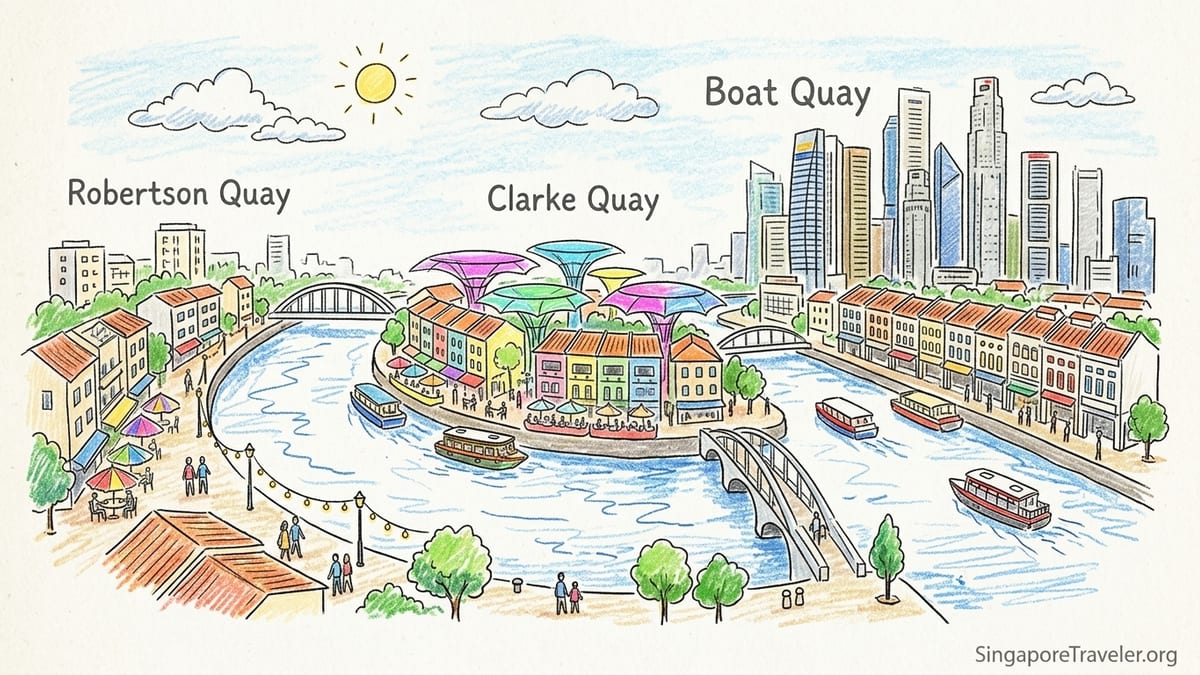
The central stretch of the Singapore River runs from Robertson Quay at the upstream end, through Clarke Quay in the middle, to Boat Quay closer to the business district and Marina Bay. Just west of Robertson Quay, the Havelock Road corridor has grown in importance since the opening of Havelock MRT on the Thomson East Coast Line, which gives fast links to Orchard, Marina Bay and Gardens by the Bay. In practice, these four micro-neighbourhoods blend into one long, walkable riverfront, but they each feel different once you arrive.
Robertson Quay is the most laid-back section. The riverfront is lined with low-rise residential blocks, cafes, wine bars and a cluster of design-led hotels. The nightlife here tends to be restaurant and cocktail bar focused and winds down earlier than Clarke Quay, which makes it popular with couples, business travellers and families who want quiet evenings. Hotels like InterContinental Singapore Robertson Quay and The Warehouse Hotel sit directly on the river, with footpaths that lead you in under 15 minutes to Clarke Quay on one side and Great World or Havelock MRT on the other.
Clarke Quay is the loud, neon centre of the action. Under its distinctive canopies you will find late-opening bars, river cruise jetties and a tangle of restaurants. Staying here puts you closest to the Thomson East Coast Line at Fort Canning MRT and the North East Line at Clarke Quay MRT, which is convenient for Chinatown and Little India. The trade-off is nightlife noise, especially on weekends, and some hotels that advertise a Clarke Quay address are set slightly back from the river, so you may not get the waterside views you expect.
Boat Quay, in contrast, sits directly under the towers of the financial district and can feel very busy during weekday lunch and after-work hours. Most of the properties here are compact shophouse hotels or budget rooms above restaurants rather than full-service hotels. Havelock, further upstream, has larger riverfront properties like Grand Copthorne Waterfront Hotel and Holiday Inn Singapore Atrium, which appeal to groups and families. These are not right on the bar strip, but the riverside footpath and the MRT station outside Grand Copthorne make it easy to reach Clarke Quay or Chinatown in around 10 to 20 minutes.
Best Luxury Riverside Hotels and True River Views
If you are looking for a high-end stay directly on the water, InterContinental Singapore Robertson Quay is the most complete luxury option along this part of the river. Rooms and studios are stacked along a riverside curve, many with floor-to-ceiling windows that look over the promenade and low-rise precinct rather than busy roads. The river-view studios and suites typically carry a noticeable premium over city-facing categories, so when you are booking pay close attention to room names that specifically mention “River View” or similar language and check recent guest photos for confirmation of the outlook. The hotel’s position in the middle of Robertson Quay means you can walk along the river to Clarke Quay in about 15 minutes or to Boat Quay in roughly 25 minutes.
For design lovers, The Warehouse Hotel at Robertson Quay is a stand-out boutique property created from a restored 19th-century godown on the river. Its 37 rooms are individually shaped by the original warehouse structure; the “River View” and “River View Suite” categories are the ones to book if you want large windows directly over the river curve. Because the building is low-rise and set close to the water, the view feels more intimate than panoramic, with reflections at night from nearby bridges and restaurants. There is a small but atmospheric rooftop pool that overlooks the river rather than a sprawling resort-style deck, which suits couples more than families who want to spend half a day at the pool.
Along the Havelock stretch, Grand Copthorne Waterfront Hotel is a large conference-style property with a long frontage on the Singapore River. Many rooms face the water and higher floors look across to the green slopes of Robertson Quay and the city skyline beyond. The hotel’s size means you have a wider choice of room types, from standard doubles to suites that work well for families who need extra space. When booking, check for “Waterfront” or “River View” wording and be aware that some lower-level rooms can have partially obstructed views due to trees or neighbouring blocks.
It is also worth mentioning that slightly downstream from Boat Quay, The Fullerton Hotel Singapore, a converted historic post office on the river, offers a more formal five-star stay. While not technically in Clarke or Robertson Quay, many river-view rooms at Fullerton look back up towards Boat Quay, and you can walk along the promenade to the Clarke Quay area in around 15 to 20 minutes. If your priority is a dramatic skyline and river panorama rather than being directly in the bar cluster, properties like this provide an alternative take on the Singapore River experience, with larger pools and grander public spaces but a more corporate feel.
Boutique Heritage and Design Hotels with Character
Beyond star ratings, many travellers choose the Singapore River area for its adaptive reuse of heritage buildings. The Warehouse Hotel is the clearest example: its brick-and-steel interiors, triple-height lobby bar and historically inspired cocktail list draw in local visitors as well as hotel guests. Rooms are compact but cleverly designed, with high ceilings, exposed trusses and custom furniture that makes the most of the footprint. Sound insulation is generally good, and because the immediate surroundings are more restaurant than nightclub focused, it tends to stay relatively quiet at night compared with Clarke Quay.
In the Robertson Quay precinct, you will also find a cluster of design-leaning hotels in modern low- to mid-rise blocks. Studio M Hotel, further along the river at Nanson Road, is known for its loft-style rooms with sleeping platforms reached by stairs and tall windows looking over either the river or the city. These split-level layouts appeal to younger couples and solo travellers who want something different from a standard box room, but the open-plan design with internal stairs can be less convenient for families with small children or travellers with mobility concerns. The lap pool is long and narrow, more suited to a quick swim or exercise than all-day lounging, and it sits one level above the street rather than directly at the water’s edge.
Newer entries like The Robertson House by The Crest Collection, which occupies a reworked former riverside hotel building at Robertson Quay, blend heritage touches with contemporary guestrooms. Its Panoramic Riverview Room type is specifically marketed around broad river views through floor-to-ceiling windows, a reminder that not all rooms within the same building share the same outlook. When you are comparing rates on booking platforms, it can be worth opening the room-type photos and descriptions in detail to understand exactly which categories justify a higher nightly price.
Boat Quay’s accommodation mix is dominated by compact shophouse hotels, many converted from historic commercial blocks. Room sizes here can be much smaller than at the larger quayside hotels, sometimes under 15 square metres, and a significant number of rooms have no direct window or open only to an internal light well. What you get in return is immediate access to the riverfront promenade, relaxed riverside bars and dining, and easy walking distance to Raffles Place and Clarke Quay MRT. Travellers who are comfortable sacrificing amenities like a pool and in-house restaurant may find these boutique options an affordable and characterful base for a few nights.
Mid-Range Hotels: Balancing Price, Pool and Location
For many visitors, the sweet spot along the Singapore River is a mid-range hotel with a decent pool, breakfast included and straightforward access to the MRT, even if it is not directly on the water. Holiday Inn Express Singapore Clarke Quay is a good example. It sits a few minutes’ walk back from the river and Fort Canning MRT, but its rooftop pool and deck offer partial skyline views, and the rates are often noticeably lower than five-star riverfront properties within a similar walking radius. Rooms are compact but designed efficiently, with queen or twin beds that work for two adults, and a number of interconnecting options for families willing to book two rooms.
Novotel Singapore on Stevens is sometimes marketed to Clarke Quay visitors, but it is not in the riverside corridor, so if your priority is being able to stroll along the river after dinner, focus instead on properties in Robertson Quay or the Havelock Road stretch. Novotel Singapore Robertson Quay, when available on your dates, bridges the gap between lifestyle and business hotel. Many rooms and some suites face the river, while others look towards the city. The outdoor pool is relatively small and partially screened by walls and greenery, so you do not get wide river views from the deck, but it is adequate for cooling off after a day of sightseeing.
A little upstream, Holiday Inn Singapore Atrium sits between Havelock and Outram, and while it is not directly on the waterfront promenade for most of its perimeter, it offers competitive pricing compared with central Clarke Quay, especially during busy periods. Rooms here are larger than average for mid-range hotels in central Singapore, with many categories accommodating up to two adults and two children using existing bedding. The trade-off is a slightly longer riverside walk to Clarke Quay’s nightlife, though Havelock MRT and several bus routes close by make it straightforward to reach Chinatown, Orchard Road and the Marina Bay precinct.
On the opposite end of the river corridor, some travellers consider staying a short walk away from Boat Quay in the Civic District or City Hall area and using the pedestrian bridges to reach the river. While these hotels are not strictly part of the Singapore River planning area, they can deliver better value for larger rooms and full facilities while keeping you within a 10 to 15 minute walk of Boat Quay’s bars and Clarke Quay’s restaurants. This strategy suits visitors who want to enjoy the river at night but prefer to sleep in a slightly calmer and more formal environment.
Budget and Compact Stays near Clarke, Robertson and Boat Quay
True budget options directly on the riverfront are limited, largely because the land is so valuable and many older buildings have been upgraded to higher categories. However, there are still more affordable hotels one or two streets back from the water in the Clarke Quay and Chinatown fringe that offer easy access to the river promenade without five-star rates. These tend to be simple, with small rooms, limited on-site facilities and sometimes windowless categories. For travellers who expect to spend most of their time out exploring, they can be a sensible choice.
In the Robertson Quay area, older properties and compact serviced residences can occasionally undercut the rates of the design-led lifestyle hotels. They rarely offer dramatic river views or large pools, but you still benefit from the pleasant, walkable environment, the choice of cafes under residential blocks and the relatively quiet evenings. If you are browsing booking platforms and notice a significantly lower nightly rate in Robertson Quay compared with big-name brands, check the photos carefully to confirm room size, whether there is any kind of kitchenette, and how far the building actually sits from the water’s edge.
Boat Quay contains some of the river’s most budget-friendly rooms, particularly in the upper floors of shophouses that front the river or side streets. These are typically reached by narrow staircases and may not have lifts, and noise from bars and restaurants below can continue into the early hours, especially on weekends. For solo travellers and younger visitors who prioritise nightlife over sleep quality and do not need a pool or breakfast buffet, these can be appealing. Families, light sleepers and travellers with mobility issues will often be happier a few streets back in the Chinatown area, which still allows you to walk to Boat Quay in roughly 10 minutes.
When comparing budget and compact stays, river views are usually the first thing sacrificed. Many lower-cost rooms in this corridor either look into internal courtyards or across to neighbouring buildings. If a glimpse of the water is important to you, filter for properties that explicitly mention river views and look for guest photos of the actual outlook, as official marketing images might be taken from a single premium room type that represents only a small portion of total inventory.
MRT Access, Walkability and Getting Around
One of the advantages of staying along the Singapore River is that you can rely heavily on the MRT and walking instead of taxis. Clarke Quay MRT on the North East Line and Fort Canning on the Thomson East Coast Line both sit close to the centre of the nightlife strip, and Boat Quay is an easy walk from Raffles Place or City Hall stations. Robertson Quay does not have a station directly on the riverfront, but you can typically reach Fort Canning, Great World or Havelock MRT on foot in around 10 to 15 minutes from most hotels in the area, depending on your walking pace and exact location.
Havelock MRT, which opened as part of the Thomson East Coast Line extension, has transformed the convenience of upstream hotels like Grand Copthorne Waterfront Hotel and Holiday Inn Singapore Atrium. From Havelock you can ride directly to Orchard Road, Gardens by the Bay and Marina Bay in a handful of stops without changing lines. The station exits are positioned near major hotels and residential blocks, so even in Singapore’s heat you only need to be outside for a relatively short walk. For families with strollers or travellers with luggage, this combination of river views and MRT access can be compelling.
In practical terms, most guests staying along the river will mix walking along the promenade with short MRT hops. The riverfront path is continuous from at least Robertson Quay down through Clarke Quay and Boat Quay, with plenty of bridges that allow you to cross from one bank to the other. Walking times between adjacent quays are typically 10 to 20 minutes, and because the buildings are low-rise along much of the river, the promenade catches breezes that can make it more comfortable than walking along traffic-heavy roads.
Before you book, it can be helpful to drop the hotel pin into a mapping app and plot walking routes to the nearest MRT station, nearby food centres like Hong Lim Market or Zion Road Food Centre, and major sights you care about. Some riverside properties are technically “on the river” but require a series of footbridges or detours to reach a station, while a hotel one block back may offer a more direct walk. Mapping these distances ahead of time helps you decide whether paying a premium for a particular riverfront address is worth it for your itinerary.
Pools, Breakfasts, Family Rooms and Nightlife Noise
Pool quality varies significantly along the Singapore River corridor. At the luxury end, properties like InterContinental Singapore Robertson Quay and The Fullerton Hotel Singapore offer well-maintained outdoor pools with loungers and some degree of skyline or river aspect, though the immediate views may be partially screened by landscaping or low walls. Boutique hotels like The Warehouse have smaller, more intimate pools that photograph beautifully but are not designed for long laps or all-day family play. Mid-range properties such as Holiday Inn Express Clarke Quay and Holiday Inn Singapore Atrium focus more on functionality, with rooftop or podium-level pools that provide a refreshing break from the heat rather than a full resort experience.
Breakfast offerings are another differentiator. Higher-end hotels along the river usually combine buffet spreads with cooked-to-order items and quality coffee, often in attractive river-facing dining rooms or terraces. This can justify a rate premium if you are the type of traveller who values a substantial breakfast and prefers to start the day slowly. Express and mid-range hotels keep things simpler, with buffet lines that cover staples like eggs, fruit, toast and local dishes such as noodles or congee. Some budget and shophouse hotels in Boat Quay and the Clarke Quay fringe skip breakfast entirely, expecting guests to eat at the many cafes and hawker centres within walking distance.
Families should pay close attention to room configurations and age policies. Singapore hotel rooms are often compact, and while many properties allow two adults and one child in a standard room, accommodating a family of four can be more complicated. Larger hotels in Havelock and some mid-range options near Clarke Quay offer dedicated family rooms, two double-bed layouts or guaranteed connecting rooms at a premium. Boutique properties like The Warehouse or some shophouse hotels may be more restrictive, with maximum occupancies of two people in many room types. It is always safer to input the correct number and ages of children into booking searches rather than assuming a room will be allowed to sleep more guests than stated.
Nightlife noise is most intense around the core Clarke Quay bar cluster and along the first row of shopfronts in Boat Quay. If you are sensitive to sound, it is worth choosing a hotel with rooms on higher floors, facing away from the riverfront bars, or staying slightly upriver in Robertson Quay or Havelock. Reviews frequently mention late-night bass from clubs and crowd noise in the busiest parts of Clarke Quay, especially from Thursday to Saturday. In contrast, the residential character of Robertson Quay and the more conference-oriented focus of Havelock hotels mean that evenings are livelier at the restaurants than in the streets, and you are more likely to hear restaurant chatter than thumping music.
The Takeaway
Choosing the best hotel along the Singapore River is less about chasing the highest star rating and more about matching a property’s specific strengths to your own priorities. Robertson Quay excels for riverside strolling, cafes and quieter nights, with design-forward hotels like InterContinental Singapore Robertson Quay and The Warehouse Hotel offering stylish bases that still keep you within walking distance of Clarke Quay. Clarke Quay and Boat Quay are unbeatable if you want nightlife at your doorstep and quick access to multiple MRT lines, but you should be prepared for smaller rooms at the budget end and a higher chance of late-night noise.
Havelock’s big riverfront hotels appeal if you are travelling as a family or group and value space, pools and easier access to family rooms over being directly in the middle of the bar action. Across all four areas, actual river views, pool setups, breakfast quality and noise levels vary more from property to property than their star ratings suggest. Looking closely at room categories for “River View” wording, checking walking times to MRT stations and reading recent guest feedback on noise and breakfast will help you identify which hotel will really suit your stay.
If you see yourself starting the day with a quiet coffee on the promenade, staying out late at Clarke Quay’s bars, or coming back in the afternoon so the kids can splash in the pool, use those moments as your frame of reference when comparing options. With a bit of homework focused on these practical details, the Singapore River can deliver some of the city’s most enjoyable and convenient stays, from heritage warehouses to high-rise family hubs.
FAQ
Q1. Which area along the Singapore River is best for first-time visitors?
For most first-time visitors, Clarke Quay or nearby Robertson Quay works best. You are within walking distance of nightlife, the river cruise jetties, Chinatown and several MRT stations, yet Robertson Quay’s hotels tend to be quieter at night than those right on the Clarke Quay bar strip.
Q2. Where can I find the quietest hotels near the Singapore River?
The quietest options are usually in Robertson Quay and the Havelock stretch. Hotels such as InterContinental Singapore Robertson Quay, The Warehouse Hotel and Grand Copthorne Waterfront Hotel sit by the river but away from the loudest Clarke Quay nightlife, especially if you choose higher-floor rooms facing away from bar clusters.
Q3. Are there good family-friendly hotels along the river?
Yes. Larger properties in Havelock and parts of Robertson Quay tend to be the most family-friendly, with bigger rooms, pools and options like connecting rooms or two double beds. Holiday Inn Singapore Atrium and Grand Copthorne Waterfront Hotel are popular with families who want space and convenient access to Havelock MRT.
Q4. Do I need to pay extra for a room with river view?
In most riverside hotels, rooms with direct river views are a specific, higher-priced category. The premium can be modest or quite noticeable depending on season and demand. If a view is important, book a named river-view category rather than hoping for an upgrade.
Q5. Is it better to stay right on Clarke Quay or a few streets back?
Staying directly on Clarke Quay gives you unbeatable access to bars and restaurants, but it also increases your exposure to late-night noise and higher rates. A hotel one or two streets back, or upriver in Robertson Quay, often offers better sleep quality while keeping you within a short riverside walk of the action.
Q6. How close are Singapore River hotels to the MRT?
Most hotels along the river are within roughly a 5 to 15 minute walk of at least one MRT station. Clarke Quay and Boat Quay have the best immediate access via Clarke Quay, Fort Canning, Raffles Place or City Hall stations, while Robertson Quay and Havelock rely on slightly longer but still manageable walks to Havelock, Great World or Fort Canning.
Q7. Are there truly budget hotels with river views?
Genuinely budget hotels with clear river views are rare because waterfront space is at a premium. The more affordable options along the riverfront are usually compact rooms in shophouses at Boat Quay or small hotels set back from the water in the Clarke Quay and Chinatown fringe, often without pools and with limited or no views.
Q8. Is the Singapore River area safe to walk at night?
The Singapore River promenade is generally considered very safe at night, with plenty of people out around Clarke Quay and Boat Quay, regular patrols and good lighting. Standard urban precautions apply, but most visitors feel comfortable walking between quays or back to their hotels late in the evening.
Q9. Can I stay along the river and still easily visit Sentosa and Marina Bay?
Yes. From Clarke Quay and Robertson Quay you can reach Marina Bay, Gardens by the Bay and Sentosa by a combination of MRT lines and short transfers, often in 20 to 40 minutes. Havelock’s connection to the Thomson East Coast Line makes it especially convenient for reaching Orchard and the Marina Bay area without relying on taxis.
Q10. How far in advance should I book a Singapore River hotel?
For peak periods such as major events, school holidays or around New Year, it is sensible to book several months ahead to secure specific room types like river-view categories or family rooms. Outside of these times, you can sometimes find competitive rates a few weeks in advance, but the most popular boutique and design hotels often sell out early.