


Just 20 to 30 minutes south of Singapore’s skyscrapers, a cluster of low-key islands offers sandy coves, coral reefs and a surprising sense of escape. The Southern Islands are close enough for an easy day trip yet feel far removed from city life, with rustic beaches, simple picnic spots and calm, clear water on good days. For first-time visitors, it helps to understand which islands you can actually set foot on, how the ferry routes work, and what to expect once you arrive, because facilities are basic and you will need to bring most things with you.
Understanding Singapore’s Southern Islands
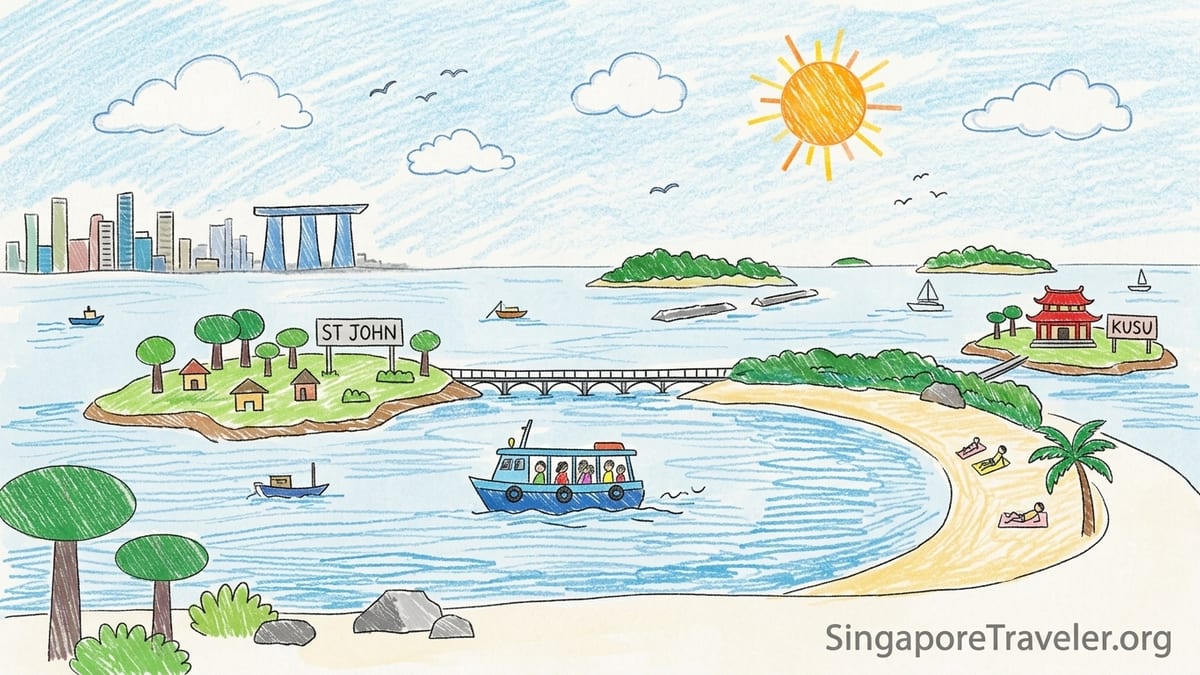
The Southern Islands are a small group of islets scattered south of the main island of Singapore, in the Singapore Strait. For most visitors, the key names are St John’s Island, Lazarus Island, Kusu Island and Sisters’ Islands, which now anchor the Sisters’ Islands Marine Park. Around them sit smaller and lesser-known islets such as Pulau Seringat, Kias Island, Pulau Tekukor and Small Sister’s Island. All of these are within roughly 6 to 8 kilometres of the mainland, close enough that you can still see the city skyline from many beaches.
The main recreational hub is the connected trio of St John’s, Lazarus and Seringat. Ferries from Marina South Pier or Sentosa typically drop passengers at a jetty serving St John’s or Lazarus, from where causeways and reclaimed land link across to Seringat and on toward tiny Kias Island. Visitors walk between them in 10 to 20 minutes, so in practice they feel like different corners of one large island with distinct coves and beaches.
Kusu Island sits slightly apart to the east, known for its Chinese temple, Malay shrines and an annual pilgrimage season. Further west, the Sisters’ Islands form the heart of the Sisters’ Islands Marine Park, which also includes surrounding reefs and the western reefs of St John’s and Pulau Tekukor. Of the two “sisters,” Big Sister’s Island is currently the accessible one for the public on designated ferries and tours, while Small Sister’s remains off limits for conservation and safety reasons.
Pulau Tekukor, once used as an ammunition depot, is not open for casual visitors even though it is part of the wider marine park. Likewise, Kias is mainly reclaimed land without public facilities, and Small Sister’s is effectively a protected conservation islet. As a first-time visitor, you can think of the Southern Islands in two simple clusters: St John’s / Lazarus / Seringat as one continuous recreation area, and Kusu plus Big Sister’s as separate destinations that you reach on specific ferry routes.
Which Islands You Can Visit and How They Connect
For independent travelers using public ferries, the easiest islands to access are St John’s, Lazarus and Kusu. Standard round-trip tickets from Marina South Pier typically allow you to disembark at St John’s / Lazarus first, then continue onward to Kusu before returning to the mainland. The route order is important, as there is usually no ferry running directly from Kusu back to St John’s; once you leave St John’s for Kusu on a scheduled service, you will return to Marina South Pier from Kusu at the end of the day.
St John’s and Lazarus are directly linked by a causeway. Depending on which operator you use, you might land at the traditional St John’s jetty or at the newer Pulau Seringat jetty, which is closer to Lazarus’ main beach. Either way, you can walk between St John’s village area and Lazarus’ sandy crescent in about 15 to 20 minutes along paved paths. Seringat is effectively part of this walk, forming the reclaimed link between Lazarus and Kias, and is sometimes mentioned in ferry descriptions as the landing point.
Big Sister’s Island now has limited but regular access via dedicated ferries and marine park itineraries. Some operators sell tickets that combine St John’s, Lazarus, Kusu and Sisters’ on a single day, often starting from Marina South Pier and stopping first at Big Sister’s before looping through Kusu and St John’s / Lazarus. These routes can change with maintenance works and conservation needs, so always check the latest schedule and inclusions when booking, especially if your heart is set on visiting the marine park trails on Big Sister’s.
Smaller islets such as Pulau Tekukor, Kias and Small Sister’s are not open for casual landing. You will typically sail past them on ferries or private yachts, catching glimpses of forested shorelines and breakwaters. Their main role for visitors is geographical: they help shape the sheltered lagoons and channels that make swimming and snorkeling around parts of Lazarus and Sisters’ calmer than open-sea beaches exposed directly to ship traffic in the Singapore Strait.
Ferries, Private Yachts and Practical Access
The most common way to visit the Southern Islands is by public ferry from Marina South Pier, served by operators such as Singapore Island Cruise and Marina South Ferries. As of 2026, typical adult return tickets for island-hopping, covering St John’s / Lazarus and Kusu, start at around 18 to 20 Singapore dollars, with slightly higher prices for itineraries that include Sisters’ Islands or additional services. Tickets can be booked online in advance or purchased at counters inside Marina South Pier terminal; weekends and school holidays are noticeably busier so advance booking is strongly recommended.
Ferry schedules vary by day and operator but usually offer several departures in the morning, roughly between 9 am and noon, and multiple return times in the afternoon, often until around 5 or 6 pm. There are more sailings on weekends and public holidays. A typical pattern is Marina South Pier to St John’s / Lazarus, onward to Kusu, then back to Marina South Pier. Separate services or add-on tickets cover Sisters’ Islands, with some days blocked off for marine park maintenance. Operators sometimes suspend weekday trips to Big Sister’s during quieter periods, so if you want to go specifically to the marine park, check for notes such as “weekday trips temporarily suspended” or “closed first and third Wednesdays.”
Alternative routes from Sentosa have become more common, with small passenger ferries running from Sentosa Cove to Lazarus. These are handy if you are already staying on Sentosa or want to pair a beach day with the island’s attractions. Fares tend to be slightly higher than Marina South Pier services but offer a shorter walk to Lazarus’ main Eagle’s Bay beach, since some boats berth directly at the Seringat or Lazarus jetty.
For groups or those seeking more flexibility, private yacht charters and water taxis operate from marinas such as Marina at Keppel Bay, ONE 15 Marina Sentosa Cove and others. Half-day shared yacht trips often cost from about 120 to 180 Singapore dollars per person, including simple snacks and use of kayaks or stand-up paddleboards, and may anchor off Lazarus’ lagoon for swimming before circling past Sisters’ Islands. Private water taxis from Marina South Pier can be booked to shuttle directly to St John’s, Lazarus, Kusu or Big Sister’s at pre-arranged times, which is useful if you are traveling with young children or want to avoid crowds on the last ferries back.
St John’s & Lazarus: Beaches, Nature and Simple Facilities
St John’s Island still feels like a quiet holiday camp. Near the main jetty you will find open lawns, a small cluster of former quarantine and research buildings, basic toilets and cold-water showers. A short walk away sits the Marine Park Public Gallery, which introduces the coral reefs and seagrass meadows of the Sisters’ Islands Marine Park through simple exhibits. This is a good starting point if you are traveling with kids and want to give context before heading to the beaches.
The primary draw for most visitors is Lazarus Island’s long, sandy crescent opening into a sheltered bay. From St John’s jetty, you walk across a causeway and along a paved road for about 10 to 15 minutes, passing casuarina trees and views across to the container port. When you reach the main Lazarus beach, you will see a wide arc of pale sand backed by grass and low trees, with anchored yachts bobbing offshore. On calm days the water is relatively clear by Singapore standards, shallow near the shore and suitable for wading and casual swims, though visibility for snorkeling is usually modest.
Facilities are limited. There are toilets and showers on St John’s near the jetty and another small block closer to the causeway, but none directly on the main Lazarus beach as of mid 2026. There are no permanent food stalls, shops or rental huts on the sand, although mobile coffee carts and ice cream vendors occasionally appear on busy weekends. This means you must bring your own water, snacks or picnic food. Many locals stop at supermarkets near Marina Bay or Tanjong Pagar to pick up sandwiches, fruit and drinks before boarding the ferry, packing everything into a soft cooler bag.
In recent years, small eco-stays such as container-style cabins and tiny houses have opened on Lazarus and Seringat, but capacity is tiny and bookings must be made well in advance. For most first-time visitors, the experience is still very much a day trip: a few hours of beach time, perhaps a short walk around St John’s old paths, and then back to the mainland on an afternoon ferry. Shade is limited on the sand, so many regulars bring their own compact beach tents or umbrellas, being careful to weigh them down against sudden gusts of wind.
Kusu Island: Temples, Turtles and Pilgrimage Season
Kusu Island, which translates as “Tortoise Island,” has a very different character from Lazarus. It is a smaller, carefully landscaped island with paved walkways, lagoons and two main religious sites: the Chinese Da Bo Gong Temple near the jetty and a trio of Malay keramat shrines perched on a hill accessed by a flight of around 150 steps. On regular days the island is quietly atmospheric, with families strolling between pavilions and shaded benches, and occasional sightings of turtles in the temple ponds.
The island becomes significantly busier during the annual Kusu pilgrimage season, typically in the ninth lunar month, when thousands of devotees travel to give thanks and seek blessings. During this period, ferry routes and ticketing arrangements can change; there may be dedicated Kusu services, limits on daily visitor numbers and temporary suspensions of combined island-hopping tickets. If you are planning a Southern Islands trip during October or early November, check whether it coincides with Kusu season and factor in larger crowds and possible schedule adjustments.
Beaches on Kusu are smaller and more manicured than Lazarus’ open crescent, with calm swimming lagoons created by breakwaters. The water can be quite pleasant on weekdays when visitor numbers are low, and there is ample shade from trees and shelters. Toilets and showers are available near the jetty, and there are usually simple food and drink stalls operating during pilgrimage season, selling items like bottled water, coconut drinks and fried snacks. Outside that period, however, food options may be minimal or absent, so you should still assume you need to bring your own supplies.
Because Kusu is part of a living religious landscape, dress and behavior should be modest around the temple and shrines. Swimwear is fine on the beaches, but cover up with a T-shirt and shorts or a sundress when you visit the prayer areas. Alcohol is not appropriate anywhere on the island, and loud music is frowned upon. Many visitors combine a short swim, a quiet walk and a brief temple visit before catching a later ferry back to Marina South Pier.
Big Sister’s Island & the Marine Park Experience
Big Sister’s Island is the showpiece of the Sisters’ Islands Marine Park, Singapore’s first marine protected area. After several years of closure for enhancement works, it has reopened with new trails, viewing decks and educational features designed to showcase coastal forest, intertidal zones and coral restoration without overwhelming the fragile environment. Access is more tightly managed here than on St John’s or Lazarus, and visitor numbers are often capped per day.
Dedicated ferries take about 20 to 25 minutes from Marina South Pier to reach Big Sister’s. On arrival, you step into a more rugged environment than the manicured parks of the mainland. A coastal forest trail, built with raised boardwalk sections, leads through native trees and shrubs to a small hilltop viewing deck. From there, you can look back toward Singapore’s skyline and out across the reefs. Interpretation panels point out species such as great-billed herons, long-tailed macaques and coastal trees like penaga laut, while marine displays explain seagrass meadows and coral nurseries around the island.
The beaches on Big Sister’s are attractive but managed primarily as conservation and education areas. Depending on tide and conditions, there may be designated zones for paddling or shallow snorkeling, often supervised by staff or volunteers. Intertidal pools in the big lagoon can be visited on guided walks, where you might see sea cucumbers, small reef fish and hardy corals adapted to Singapore’s turbid waters. Because the island is part of an active research and restoration project, rules are strict: no collecting shells or corals, no fishing, and no stepping on or touching marine life.
Facilities are basic. Expect toilets and simple shelters, but no eateries or shops. Many visitors treat Big Sister’s as a half-day learning excursion, bringing their own packed lunches and plenty of water. On some itineraries, the boat then continues to Kusu or St John’s / Lazarus, so read the fine print when you book. A day that combines Big Sister’s with at least one of the more relaxed beach islands is ideal: you get both an educational marine park experience and a more laid-back swim or picnic elsewhere.
Beaches, Weather, Swimming Safety and What to Bring
Weather in Singapore is warm and humid year-round, with daytime highs around 30 to 33 degrees Celsius and very strong sun even when clouds are present. Short, heavy showers are common, especially in the mid to late afternoon during the inter-monsoon months. On the Southern Islands, you are more exposed than in the city, with limited shelter. Plan for intense heat and bring more water than you think you need; a practical baseline is at least 1.5 to 2 litres per person for a full day of island-hopping, more if you are walking and swimming a lot.
Sea conditions around St John’s, Lazarus, Kusu and Sisters’ are generally calm in the mornings, with choppier water possible on windy afternoons or during the Northeast Monsoon (roughly November to January). The islands sit near major shipping lanes, so you will see large container ships offshore, but swimming areas are usually set in sheltered bays protected by breakwaters or natural reefs. There are no lifeguards on duty, however, and currents can still be strong outside the main swimming zones or during spring tides. Always stay close to shore, avoid swimming alone, and keep a close eye on children.
Footwear is more important than many first-time visitors expect. Paths between the jetties and beaches are paved but can be uneven, with steep sections and occasional monkey droppings or fallen leaves. Simple trainers or sports sandals are suitable for the walks, with flip-flops or water shoes for the beach. If you plan to explore rocky shores or intertidal areas on guided walks, covered footwear with good grip is strongly recommended to avoid cuts on barnacles or coral.
Because amenities are sparse, pack as if you are going to a remote beach rather than a city park. In addition to water and food, bring reef-safe sunscreen, hats, sunglasses, insect repellent, a lightweight beach mat or small picnic blanket, and a dry bag for electronics in case of sudden rain. Many locals also pack a small rubbish bag so they can carry out their own trash, as bins on the islands can overflow on busy weekends. Basic first-aid items like plasters and antiseptic wipes are useful if you get minor scrapes on rocks or coral.
Food, Toilets and Whether to Plan One Day or Several Trips
First-time visitors are often surprised by how little commercial development exists on the Southern Islands. There are no cafes, convenience stores or restaurants on St John’s, Lazarus or Big Sister’s, and food on Kusu is seasonal at best. This is part of the charm, but it also means you must plan ahead. A common approach for locals is to pick up bento boxes, onigiri or bakery items from malls around Marina Bay, or buy cold drinks and snacks at Marina South Pier’s small shops, then pack everything into a soft cooler. Remember that whatever you bring in must be carried back out, including food waste.
Toilet access is reasonable but scattered. On St John’s, you will find toilets and simple cold-water showers near the main jetty and in a few other blocks. On Lazarus’ main beach there are currently no permanent toilet buildings, so expect to walk 10 to 15 minutes back toward St John’s facilities. Kusu has a central toilet and shower block near the jetty, while Big Sister’s provides basic toilets near the arrival area. During peak periods or special events, queues can form, so build that into your timing if you are catching a specific ferry home.
Whether to visit in one long day or several shorter trips depends on your energy level and interests. Many first-time travelers are happy with a single day that focuses on St John’s and Lazarus only: take a morning ferry, enjoy a leisurely beach picnic and swim, walk a little around St John’s paths, then head back to the mainland by late afternoon. If you add Kusu, you will spend more time on ferries and have slightly less beach time, but you gain a cultural and religious dimension plus different lagoon-style swimming areas.
If you also want to experience Big Sister’s and the marine park trails in a meaningful way, consider dividing your time into at least two separate outings. One day can be dedicated to Big Sister’s plus perhaps a short stop on Kusu or St John’s, following a structured itinerary with guided elements. Another day can then be more relaxed, focusing only on Lazarus’ beach. This approach reduces rushing between ferries and allows you to adjust plans for weather, which can be unpredictable. For visitors staying several days in Singapore, spreading trips out also avoids heat fatigue from back-to-back full days under the tropical sun.
FAQ
Q1: Can I visit all the Southern Islands in one day?
It is possible to visit St John’s, Lazarus and Kusu in a single day using standard island-hopping ferries, but adding Big Sister’s often makes the schedule tight. If you want time to swim, picnic and explore trails without rushing, consider at least two separate day trips.
Q2: Where do I catch the ferry to St John’s, Lazarus, Kusu and Big Sister’s?
Most public ferries depart from Marina South Pier, which is connected to the MRT network. Some services run from Sentosa to Lazarus, and private yachts or water taxis depart from marinas such as Marina at Keppel Bay or ONE 15 Marina Sentosa Cove.
Q3: How much do ferry tickets to the Southern Islands cost?
As of 2026, adult return tickets for basic island-hopping between Marina South Pier, St John’s / Lazarus and Kusu generally start around 18 to 20 Singapore dollars, with higher prices for routes that include Sisters’ Islands or special itineraries. Prices may change, so check with operators when booking.
Q4: Are there shops or restaurants on the islands?
No. There are no permanent shops or restaurants on St John’s, Lazarus or Big Sister’s, and Kusu usually has only seasonal food stalls during the pilgrimage period. Always bring your own water and food from the mainland.
Q5: Is swimming safe around the Southern Islands?
Swimming is generally safe in designated bays and lagoons when the sea is calm, but there are no lifeguards and currents can be strong outside sheltered areas or during spring tides. Stay close to shore, supervise children carefully and avoid the water during storms or if you see warning signs.
Q6: Do I need to book ferry tickets in advance?
Advance booking is strongly recommended for weekends, public holidays and school vacation periods, and is essential for trips that include Big Sister’s Island, which has limited capacity. On quieter weekdays, same-day purchase at Marina South Pier is sometimes possible but not guaranteed.
Q7: Are there toilets and showers on the islands?
Yes. St John’s and Kusu have basic toilets and cold-water showers near their jetties, and Big Sister’s provides toilets near the arrival area. Lazarus’ main beach does not have its own toilets, so you must walk back toward St John’s facilities.
Q8: Can I stay overnight on the Southern Islands?
Limited official accommodation exists in the form of small eco-cabins and holiday lodges on or near Lazarus and St John’s, but capacity is very low and bookings must be made well in advance. For most visitors, the Southern Islands are best treated as day-trip destinations.
Q9: What should I pack for a day on the Southern Islands?
Bring plenty of drinking water, food or snacks, reef-safe sunscreen, hats, sunglasses, insect repellent, a beach mat, swimwear, a change of clothes, basic first-aid items and a small bag for your rubbish. Compact shade such as a beach tent or umbrella is helpful on Lazarus’ exposed beach.
Q10: Are the Southern Islands suitable for young children and older travelers?
Yes, provided everyone is comfortable with some walking in heat and limited facilities. Families often enjoy Lazarus’ shallow bay and Kusu’s calm lagoons. Choose itineraries with shorter ferry rides, avoid the hottest midday hours when possible and bring sufficient water, snacks and sun protection.