


Just off Singapore’s gleaming skyline, a trio of low-key islands promises something the mainland often cannot: space, quiet and a hint of old-school seaside life. Lazarus, St John’s and Kusu Islands sit only about 20 to 30 minutes by ferry from Marina South Pier or Sentosa Cove, yet each delivers a very different experience, from lazy beach hours and beginner-friendly water sports to marine education, heritage shrines and temple visits. With most visitors having only a day or two spare, the real question is not whether to go, but which Southern Island is actually worth your time.
Orientation: Three Islands, One Easy Day Trip
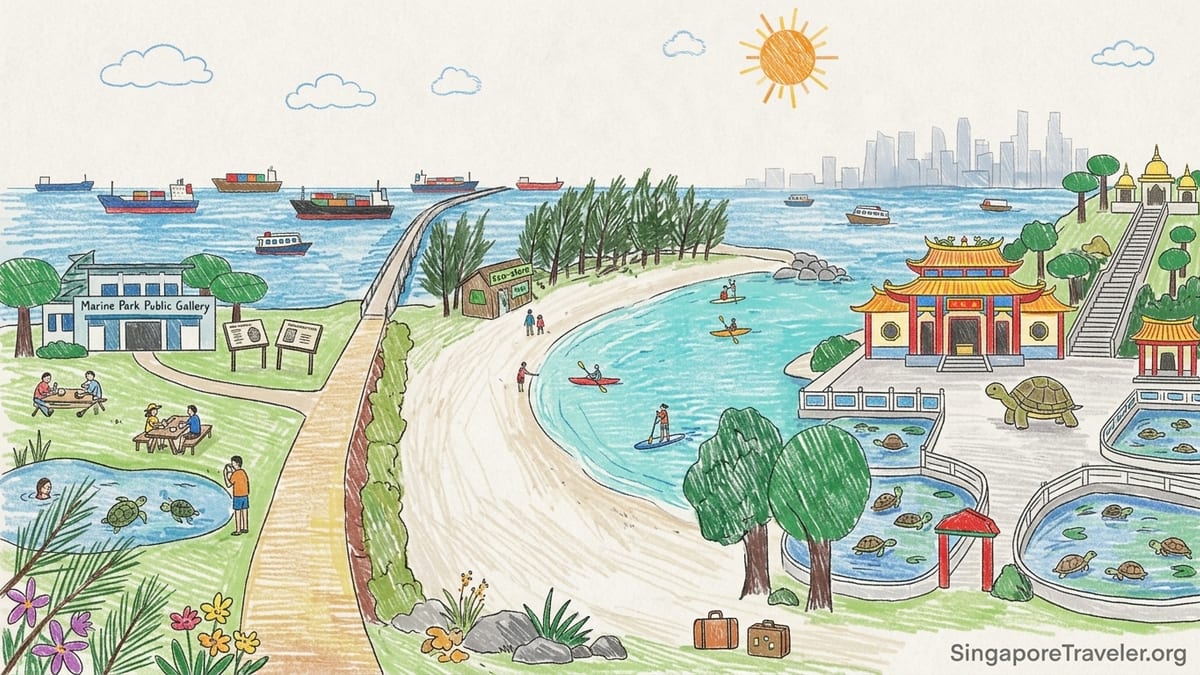
Lazarus, St John’s and Kusu Islands form the core of Singapore’s Southern Islands that are easily visited on a simple round-trip ferry from Marina South Pier. Standard public ferries typically stop first at St John’s Island, from which you can walk to Lazarus via a short causeway, and then continue on separate sailings to compact, temple-dotted Kusu. The Singapore Land Authority explicitly promotes a St John’s to Lazarus to Kusu route as the recommended island-hopping sequence, and most tour operators mirror this order in their own itineraries. In practice, this means you can comfortably visit all three in a long day, but you need to be honest about what you actually want to do: swim and paddle, wander and learn, or pay your respects at shrines and temples.
Ferries are usually run by a handful of operators that serve both locals and day-trippers: think basic, air-conditioned boats rather than tourist “cruises.” From Marina South Pier, round-trip island-hopping tickets are often priced in the region of a reasonably inexpensive urban attraction, making the Southern Islands one of the better-value getaways in the city. There are also Sentosa-linked services and small-group speedboat trips that cost more but shave down travel time and add commentary. The crucial planning step is checking current jetty arrangements and sailing times before you commit an entire morning, because occasional maintenance closures can temporarily change where you land, and public ferries typically stop by late afternoon rather than running into the night.
Once you are on the water, the city’s container terminals and anchored cargo vessels slide past, and then the skyline fades into the haze behind you. By the time you reach St John’s or Lazarus, the sense of having left mainland Singapore is very real: the air is saltier, the soundscape shifts from traffic to rustling casuarinas and bird calls, and your phone may flip in and out of strong reception. That psychological distance is a big part of the Southern Islands’ charm, and it is why many repeat Singapore visitors carve out a second-trip day here instead of revisiting Orchard Road or Gardens by the Bay.
Lazarus Island: Beach Time and Gentle Water Sports
If you picture yourself lying on sand, swimming in reasonably clear water and paddling a kayak between green headlands, Lazarus Island is the Southern Island that earns your ferry ticket. Linked by reclaimed land to St John’s, it has one of the most talked-about stretches of beach in Singapore, an 800-metre arc of pale sand and usually calm water inside a broad cove. While local opinions differ on just how pristine Singapore’s seas are, Lazarus generally offers cleaner, clearer water than most mainland beaches, particularly on weekdays or non-holiday mornings when crowds are light. It feels surprisingly wild by Singapore standards: no tower-block backdrop, no roaring highway, just anchored yachts, curving sand and scrubby greenery.
The big evolution in recent years has been the introduction of non-motorised water sports and modest services. The Lazarus Sea Sports Centre, run by an outdoor adventure operator, now rents stand-up paddleboards, kayaks and similar craft, and runs guided “cycle and kayak” experiences that link quiet cycling on St John’s with paddling along the coast of Lazarus. On a typical Saturday, you may see small groups in bright lifejackets following a guide past the headland, while others wobble on paddleboards inside the sheltered bay. For families with older kids or teens, this can turn a basic beach day into something closer to an eco-adventure, without the noise and wake of jet skis or motorboats.
Facilities remain deliberately limited. There are public toilets and showers, basic shelters and an eco-conscious convenience outlet that opens mostly on weekends, selling cold drinks, cup noodles, picnic snacks and small essentials like sunscreen or beach mats. On a Sunday, you may watch a couple fill a soft cooler with canned drinks and instant meals here before spreading a mat in the shade. Serious food, however, still needs to be brought from the mainland; there are no hawker centres, bars or cafes like Sentosa’s Tanjong Beach or Siloso. Many groups pick up takeaway from nearby neighbourhoods such as Tanjong Pagar or HarbourFront before boarding the ferry, or grab simple rice and noodle dishes from Marina South Pier’s canteen stalls.
Time-wise, Lazarus is the island that rewards lingering. You can technically “see” the main beach in an hour, but that misses the point. With limited shade and midday heat, most visitors settle into a rhythm of short swims, reading under a tree, then perhaps a mid-afternoon paddle session. If you book a guided water-sports package and add some unstructured beach time, three to five hours disappears easily. For travellers squeezing the Southern Islands into a single morning, Lazarus works best if your priority is obvious beach time rather than trying to do everything on all three islands.
St John’s Island: Nature Trails, History and the Marine Centre
St John’s Island is larger and more varied than Lazarus, and it is the natural starting point for most Southern Islands days. Historically known as a quarantine station and even a place of detention for political prisoners, it now functions as a low-key recreational island with a quiet lagoon beach, picnic lawns, simple gazebos and a growing role as the public face of Singapore’s marine conservation efforts. If you walk off the ferry and head right, you will reach the swimming lagoon, often used by families and small groups grilling at pre-booked barbecue pits. Turn left and inland instead, and you find a network of short trails passing old buildings, interpretive signs and scrubland viewpoints.
The headline attraction for many is the Sisters’ Islands Marine Park Public Gallery, part of a broader marine park that officially includes the waters and reefs around St John’s. This compact visitor centre functions as an educational hub, with aquarium tanks, a viewing pool and interactive exhibits explaining how seagrass meadows, coral reefs and mangroves fit into Singapore’s coastal ecology. On a hot afternoon, you might find a local school group gathered around touchscreens while a guide points out the difference between local hard corals and the colourful reef fish displayed in tanks. Entry is free, though you do need to time your visit to the gallery’s current opening hours, which are typically on specific days with a lunch break closure.
Beyond the gallery, St John’s appeals to travellers who enjoy low-intensity exploring. There are no steep hikes, but you can follow a self-guided heritage trail past remnants of the old quarantine facilities, staff quarters and religious sites. Birdwatchers sometimes linger with binoculars along the quieter stretches, hoping to spot migratory species or coastal raptors circling overhead. Photographers favour the views back to the city skyline or out toward passing ships, particularly in late afternoon when the light softens and long shadows stretch across the grass.
Infrastructure is a notch more developed than on Lazarus. Toilets, showers and sheltered pavilions are dotted near the main lagoon and along the pathways, and there are bookable holiday bungalows and camp-style facilities used for school camps and corporate retreats. What the island still lacks is food: there are no cafes or restaurants, so you must bring everything you want to eat and drink. This, combined with the interpretive centre and trails, makes St John’s a better fit for visitors comfortable packing a simple picnic and strolling on their own rather than expecting a commercialised, turn-key attraction.
Kusu Island: Culture, Pilgrimage and Short Exploratory Visits
Where Lazarus leans beachy and St John’s leans educational, Kusu Island is all about myth, religious devotion and compact exploration. The name “Kusu” means “tortoise” in Chinese, and local legend tells of a giant turtle that saved shipwrecked sailors by turning into an island. Today, Kusu is dominated by a brightly painted Tua Pek Kong temple with strong Chinese architectural features, dedicated to both a traditional wealth deity and the bodhisattva Guanyin, along with Malay shrines on a small hill reached by a staircase. During the annual Kusu pilgrimage season, typically in the ninth lunar month, thousands of devotees travel here to pray for health, prosperity and peace.
On an ordinary weekday outside pilgrimage season, Kusu feels tranquil and contained. Stepping off the jetty, you walk a short distance to the main temple courtyard, where incense coils smoulder above offerings, and turtle pools hold what feels like dozens of slow-moving residents, a literal nod to the island’s name. This is not a theme-park experience: expect modest facilities, open-air pavilions, religious stalls during busier times and simple tiled walkways. Visitors who appreciate Singapore’s multicultural religious landscape often pair Kusu with a stop at mainland temples or mosques to understand how beliefs overlap and coexist.
There is a small man-made beach and lagoon area, but Kusu is not where you go for serious swimming. Most travellers spend their time walking slowly between the temple, turtle ponds and Malay shrines, reading the plaques and observing worshippers at a respectful distance. Conservative dress is appreciated, particularly if you intend to enter prayer halls. Food options are minimal to nonexistent outside the festival period, when temporary stalls might sell snacks and drinks; plan as if there were no refreshments at all, and you will not be caught out.
Because of its size and focus, Kusu is a classic “short stay” island. Many visitors feel they have covered the essentials in 60 to 90 minutes, including time for quiet reflection and photographs. For travellers with only a half-day to spare, this makes Kusu a good final stop after Lazarus and St John’s: you can absorb a very different cultural dimension of the Southern Islands and still be back at Marina South Pier before evening, in time for dinner in the city.
Practicalities: Ferries, Facilities, Food and Families
All three islands rely entirely on ferries and private boats for access, and the simplest entry point is Marina South Pier, a short ride from the Downtown Core by taxi or MRT. Ticket counters and small tour desks here sell round-trip passes for fixed routes that cover St John’s and Lazarus, with some including Kusu on a timed circuit. Operators also publish sample itineraries, such as a morning departure visiting St John’s and Lazarus first, then a mid-afternoon sailing to Kusu before returning to the mainland before sunset. Separate services and charters run from Sentosa Cove, aimed more at leisure boaters and resort guests who want a quick hop to Lazarus for a few hours of sand and sea.
Recent years have seen temporary jetty closures and maintenance works at St John’s and Kusu, prompting authorities to reroute some landings and advise visitors not to disembark at certain piers during specific repair windows. While these works are necessary to keep the infrastructure safe, they underscore why it is essential to check current advisories from the Singapore Land Authority or ferry operators before leaving your hotel. Travellers arriving to find a jetty closed for repair will usually be offered an alternative route or itinerary, but that may mean spending more time on one island than planned or skipping another entirely.
Facilities across the trio are basic but adequate if you come prepared. Toilets and fresh-water showers are available on Lazarus and St John’s, though they may not match the standard of an urban mall. Shade is limited on the open beaches; lightweight umbrellas, hats and sunscreen are vital. The only regular retail offering is the small convenience store on Lazarus, typically open on Fridays to Sundays and selling simple ready-to-eat food, drinks and beach items. Kusu has seasonal vendors during pilgrimage periods, but otherwise there are no shops or restaurants. In concrete terms, that means a family of four could save money and avoid stress by packing supermarket snacks, fruit and sandwiches on the mainland instead of relying on buying food once they arrive.
For families, the islands present different strengths. Lazarus is best with confident swimmers aged about eight and up, who can appreciate the wide beach and shallow waters, especially when paired with supervised kayaking or paddleboarding. Younger children can certainly enjoy the sand, but parents must stay vigilant near the water and should not expect playgrounds or lifeguards. St John’s works well for school-age kids curious about marine life and history; the marine park gallery has hands-on elements that help break up the heat of the day. Kusu, meanwhile, is suited to short attention spans: kids can count turtles, climb stairs to the hilltop shrines and be back on the boat within an hour.
How Long to Spend: Single-Island Days vs Island-Hopping
With Singapore itineraries often packed into three or four days, you may only be willing to sacrifice one day or even half a day to the Southern Islands. The decision comes down to what you value most. If your dream is a laid-back “Singapore beach day” that feels nothing like Sentosa, dedicate the bulk of your time to Lazarus. In practical terms, that might mean catching a morning ferry, settling in for three to five hours on the sand with a rented paddleboard session in the middle, then heading back without feeling obliged to rush over to Kusu.
Travellers with a strong interest in nature and heritage might flip the priority: allocate two to three hours to St John’s, splitting time between the marine park gallery, the lagoon and short walks, then treat Lazarus as an add-on beach stroll rather than the main event. You could, for example, spend your morning at the gallery and on the heritage trail, enjoy a picnic lunch under the casuarinas, then walk or cycle across the causeway to Lazarus for an hour of swimming before catching an afternoon boat.
Kusu generally does not demand a huge time commitment, except during the pilgrimage season when ferry queues, crowds at the temple and rituals can fill several hours. Outside that window, most independent travellers find that an hour or so suffices. That makes Kusu an ideal final stop on an island-hopping ticket. Following the SLA-recommended sequence, you would start on St John’s for exploration and education, move on to Lazarus for beach time and possibly water sports, then end on Kusu for a cultural interlude before heading back to the city for dinner along the Singapore River or in nearby Tiong Bahru.
It is also worth considering energy levels and weather. Singapore’s heat and humidity can sap enthusiasm quickly, particularly for those unused to the equatorial climate. Visitors who normally enjoy six-hour hikes may find themselves ready to retreat after three hours of sunshine and salt spray. Building flexibility into your plan helps: start with St John’s and Lazarus, and keep Kusu as optional if you still have the appetite. As public ferries usually require you to commit to particular departure times, booking the earliest morning sailing you can comfortably manage gives you the most leeway to adjust on the fly.
Which Island Is Best For You?
When you strip away the romantic notions of “hidden islands,” the Southern trio serves distinct traveller profiles. Lazarus Island is the clear pick for beach-first visitors who want to swim, tan and try low-key water sports without the party vibe of Sentosa’s beach clubs. If you are the kind of traveller who happily spends a full day on a single cove in Thailand or Malaysia, Lazarus comes closest to scratching that itch within Singapore’s limits, especially on a weekday when the sand is relatively quiet. It is not a world-class tropical beach by regional standards, but for Singapore itself, it is often cited by locals as one of the nicest places to get into the sea.
St John’s Island is the choice for those who like a bit of story and substance with their scenery. The former quarantine and detention history, the modest heritage trail and the connection to the Sisters’ Islands Marine Park give it layers that reward curious visitors. Imagine a second-time visitor to Singapore who has already done the big “wow” attractions. A half-day on St John’s lets them see the city from a different angle, quite literally, while also learning about coral restoration, seagrass conservation and the ways Singapore balances development with pockets of nature.
Kusu Island, in contrast, suits travellers interested in religion, folklore and quiet contemplation. It is particularly meaningful for visitors who want to understand how Chinese and Malay spiritual traditions intertwine in Singapore. Someone who already plans to visit temples like Thian Hock Keng or the Buddha Tooth Relic Temple in Chinatown might appreciate Kusu as part of a broader spiritual itinerary, seeing how devotion extends offshore. For others, Kusu is a pleasant, photogenic stop that rounds out an island-hopping day without demanding much physical effort.
If you genuinely cannot decide and time is tight, use a simple rule of thumb. With only half a day, choose either Lazarus for a mostly-beach break or St John’s for a walk-and-learn outing, and skip Kusu. With a full day and a moderate budget, follow the St John’s to Lazarus to Kusu sequence: it is recommended by the land authorities for a reason, and it naturally progresses from exploration to relaxation to reflection.
When Combining All Three Islands Makes Sense
For many travellers, the most satisfying Southern Islands experience is not about picking a single “winner” but deliberately combining all three into a themed day. This makes the most sense if you already know you enjoy being outdoors in warm weather and you can dedicate at least six to seven hours, including ferry transfers. For example, a couple visiting Singapore for the second time might choose a Saturday as their “island day,” booking a morning ferry from Marina South Pier that drops them at St John’s around mid-morning. They spend two hours between the marine park gallery and a stroll along the lagoon, then walk across the causeway for a relaxed picnic and swim on Lazarus. By mid-afternoon, they re-board a scheduled ferry for a final hour on Kusu, lighting incense at the temple and photographing the turtle ponds before returning to the mainland at dusk.
Families with older children and teens can shape the day around variety. A realistic family itinerary could involve breakfast near their hotel, a mid-morning sailing to St John’s where they visit the marine gallery, then a pre-booked cycle-and-kayak tour that uses Lazarus as a base. After showers and a late lunch picnic on the beach, they hop over to Kusu to satisfy grandparents interested in the temple and shrines. While such a day requires more planning than a simple mall visit, it also creates a shared narrative: “We visited Singapore’s marine park, paddled between islands and climbed a hill shrine on a turtle island,” which feels far richer than another afternoon in air conditioning.
Combining all three also makes logistical sense if you are conscious of transport costs. Once you have paid for the ferry, every extra island you step onto increases the value of your ticket, because the incremental time cost is relatively small. It is the departure from and return to the mainland that consumes the biggest chunks of time. As long as you pack food, water and sun protection, and you are comfortable with simple facilities, there is little downside to riding the circuit.
There are, however, situations where combining all three does not make sense. Short business trips with only free mornings, travellers particularly sensitive to heat or mobility constraints may find the hopping and walking tiring. In those cases, a single, focused visit to either Lazarus or St John’s is likely to be more enjoyable than trying to tick boxes. Seen that way, the question is not “Which Southern Island is best?” but rather “Which Southern Island fits the day I realistically have?”
The Takeaway
For visitors willing to step beyond Singapore’s most advertised attractions, the Southern Islands offer a refreshingly unvarnished slice of sea, sky and story. Lazarus Island delivers the city-state’s most talked-about patch of sand and a growing menu of beginner-friendly water sports, tailored to anyone craving space and a swim. St John’s Island layers quiet lawns and lagoon views with history and marine education, rewarding travellers who like to learn as they wander. Kusu Island completes the trio with a cultural and spiritual lens, its temple complex and hilltop shrines turning a short ferry ride into a small pilgrimage.
With limited time, your choice should mirror your priorities. Beach-lovers and paddlers will be happiest dedicating a chunk of the day to Lazarus, while heritage and nature enthusiasts gravitate toward St John’s. Those with a curiosity about local beliefs or visiting during the ninth lunar month may find that Kusu becomes their highlight, even if the stay is brief. When you have a full day and the stamina for sun, combining all three along the St John’s to Lazarus to Kusu route makes practical and experiential sense, turning a handful of simple ferries into a miniature journey through Singapore’s wild edges, living seas and layered faiths.
Ultimately, none of the islands is “best” in the abstract. Each is best for a particular kind of day and traveller. With accurate ferry timings, a packed picnic and realistic expectations of basic facilities, you can tailor the Southern Islands to be the quiet counterpoint in your Singapore story: a day where the skyline recedes, your feet touch sand, and the city reveals another, slower-facing side.
FAQ
Q1. How do I get from Singapore to Lazarus, St John’s and Kusu Islands?
Most visitors take public ferries from Marina South Pier on round-trip tickets that include St John’s and Lazarus, with some services adding Kusu on a fixed schedule. There are also more expensive small-group boats and Sentosa-based services that mainly target Lazarus for shorter beach visits.
Q2. Which Southern Island has the best beach for swimming?
Lazarus Island is generally considered to have the most appealing beach, with a long, gently curving bay and usually calm water. While Singapore’s seas are not as clear as regional beach destinations, Lazarus offers one of the nicest seaside experiences within the country.
Q3. Are there food and drinks available on the islands?
Food options are very limited. Lazarus has a small convenience-style outlet on select days selling snacks and drinks, but St John’s and Kusu usually have no permanent food stalls. It is best to bring your own picnic, water and any special items like baby food or dietary-specific snacks.
Q4. Is it suitable to visit the Southern Islands with young children?
Yes, but expectations and supervision matter. St John’s works well for gentle walks and the marine gallery, while Lazarus offers sand play and shallow water for confident swimmers. There are no lifeguards, playgrounds are minimal and shade is limited, so families should bring sun protection, plenty of water and keep a close eye on children near the sea.
Q5. How much time do I need to visit all three islands in one day?
To follow the St John’s to Lazarus to Kusu sequence comfortably, plan for at least six hours including ferry transfers. That allows roughly two hours on St John’s, two to three on Lazarus and about an hour on Kusu, depending on ferry timings and how long you choose to swim, walk or visit temples.
Q6. Can I stay overnight on any of the Southern Islands?
Overnight options are limited and change over time. St John’s has simple holiday bungalows and camp-style accommodation used mainly for school and group bookings, while Lazarus has hosted small-scale, short-term lodging like tiny houses or glamping-style tents. These are typically pre-booked and may not operate year-round, so visitors should confirm availability well before planning an overnight stay.
Q7. What should I wear and bring for a Southern Islands trip?
Light, breathable clothing, a hat, sunglasses and sturdy sandals or trainers are recommended, with swimwear and a quick-dry towel if you plan to swim. Essentials include sunscreen, mosquito repellent, reusable water bottles, snacks or a full picnic, a small rubbish bag to carry out your trash and any personal medications, since there are no pharmacies on the islands.
Q8. Is Kusu Island worth visiting if I am not religious?
Yes, many non-religious visitors enjoy Kusu for its legends, temple architecture and peaceful atmosphere. You can walk through the temple courtyards, observe rituals respectfully and climb to the hilltop shrines for views, without needing to participate in worship. Modest dress and quiet behaviour are appreciated.
Q9. Are there guided tours or water-sports packages available?
Several operators offer guided island-hopping tours and non-motorised water-sports activities, particularly based out of Lazarus. Options can include stand-up paddleboarding, kayaking, cycling-and-kayak combos and family-friendly coastal walks. Booking ahead is advisable, especially on weekends or public holidays when demand for equipment and guides increases.
Q10. How do I choose between Lazarus, St John’s and Kusu if I only have half a day?
If you want a beach-focused escape with swimming and sun, choose Lazarus. If you prefer light walking, history and marine education, opt for St John’s. If your interest is culture and temples or you are visiting during the Kusu pilgrimage season, prioritise Kusu. With only a few hours available, focusing on one island will usually be more enjoyable than trying to rush through all three.